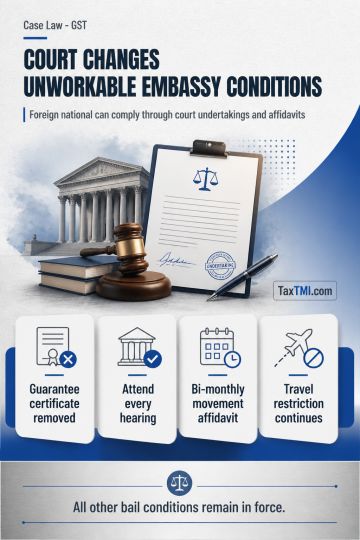
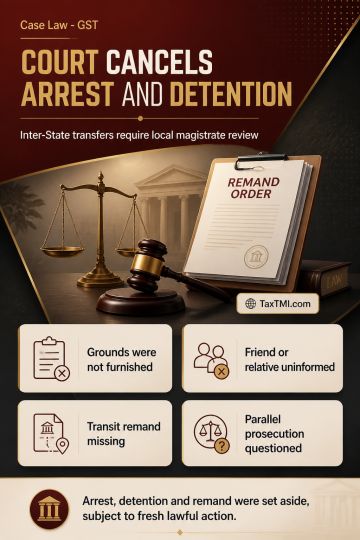
Arrest safeguards and transit remand requirements invalidated detention following inter-State transfer without communicated grounds or magistrate auth...
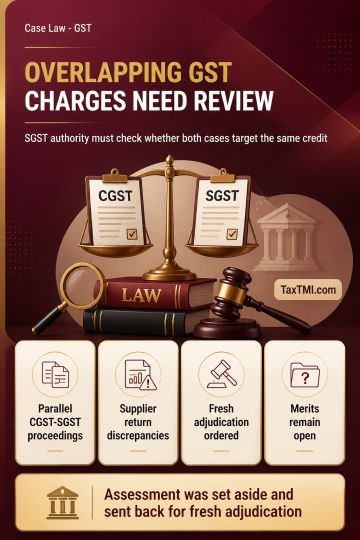
Arrest safeguards require disclosed grounds, relative intimation and transit remand, while duplicate prosecution under the CGST framework is unsustain...
Document Identification Number defects can invalidate GST assessments, with delayed challenges entertained conditionally where patent irregularities e...
Windmill commissioning evidence supported higher depreciation where grid connection and electricity generation proved operational use before the relev...
Section 125 of the CGST framework was construed as prescribing a single maximum general penalty of Rs. 25,000, so the penalty could not be split into separate CGST and SGST penalties to exceed that statutory cap. The High Court therefore held that imposing Rs. 25,000 under CGST and a further Rs. 25,000 under SGST under the same provision was unjustified. The penalty order and the appellate order were set aside, and the matter was remanded for fresh consideration in accordance with law, with all available grounds left open to the petitioner.
Section 125 of the CGST framework was construed as prescribing a single maximum general penalty of Rs. 25,000, so the penalty could not be split into separate CGST and SGST penalties to exceed that statutory cap. The High Court therefore held that imposing Rs. 25,000 under CGST and a further Rs. 25,000 under SGST under the same provision was unjustified. The penalty order and the appellate order were set aside, and the matter was remanded for fresh consideration in accordance with law, with all available grounds left open to the petitioner.
Note: It is a system-generated summary and is for quick reference only.
 TaxTMI
 of 4805














 Join Channel


 TaxTMI
