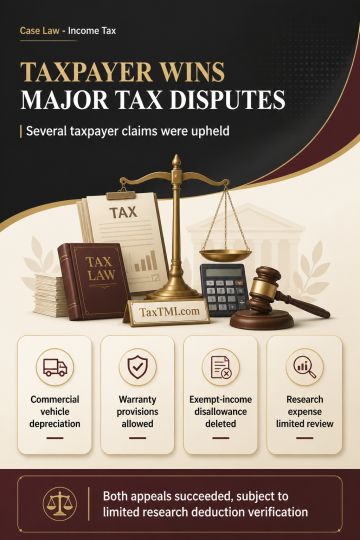
Commercial vehicle depreciation, scientifically determined warranty provisions and exempt-income disallowances were resolved in favour of the taxpayer...
Inherited property sale proceeds require capital-gains treatment where ownership is supported by evidence, not suspicion or unverified signature doubt...
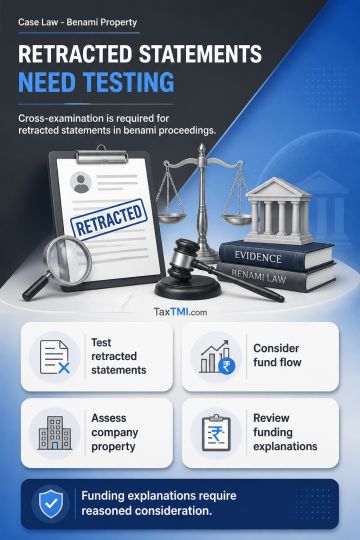
Cross-examination of retracted statements is essential where foundational evidence supports a benami allegation and documented funding explanations re...
Capital-goods exemption covers plant-modernisation accessories, while the import restriction applies only to earlier capital-goods components and spar...
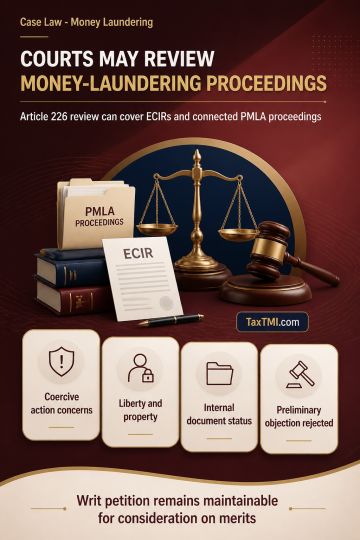
Constitutional judicial review permits challenges to ECIRs and connected money-laundering proceedings where coercive action affects fundamental intere...
Section 125 of the CGST framework was construed as prescribing a single maximum general penalty of Rs. 25,000, so the penalty could not be split into separate CGST and SGST penalties to exceed that statutory cap. The High Court therefore held that imposing Rs. 25,000 under CGST and a further Rs. 25,000 under SGST under the same provision was unjustified. The penalty order and the appellate order were set aside, and the matter was remanded for fresh consideration in accordance with law, with all available grounds left open to the petitioner.
Section 125 of the CGST framework was construed as prescribing a single maximum general penalty of Rs. 25,000, so the penalty could not be split into separate CGST and SGST penalties to exceed that statutory cap. The High Court therefore held that imposing Rs. 25,000 under CGST and a further Rs. 25,000 under SGST under the same provision was unjustified. The penalty order and the appellate order were set aside, and the matter was remanded for fresh consideration in accordance with law, with all available grounds left open to the petitioner.
Note: It is a system-generated summary and is for quick reference only.
 TaxTMI
 of 4807
















 Join Channel


 TaxTMI
