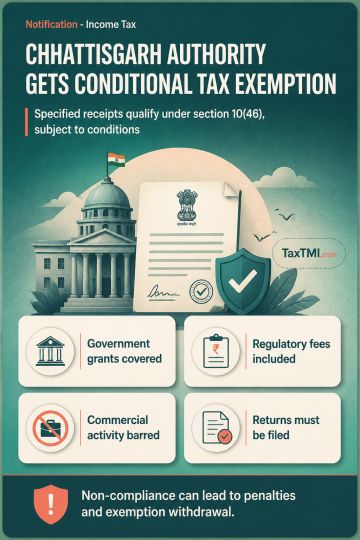
Specified regulatory authority income receives conditional tax exemption, subject to non-commercial activity, unchanged income character, and return f...
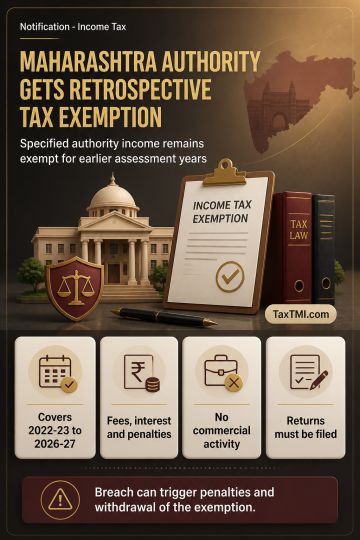
Tax exemption for regulatory authority income applies retrospectively, subject to non-commercial activity, unchanged income sources, and return-filing...
Input tax credit conditions remain constitutionally valid, with eligible recipient claims considered under GST circulars and retrospective filing dead...
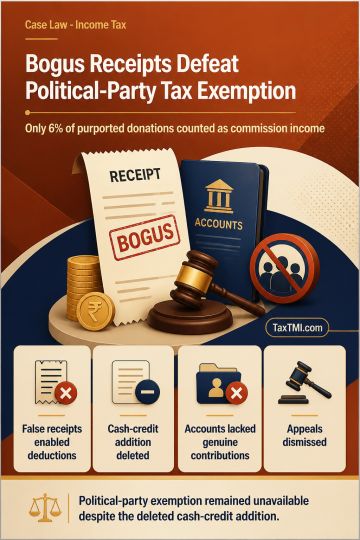
Bogus donation receipts justified commission income assessment and defeated political-party tax exemption for inaccurate accounts and reporting failur...
Pure reimbursement without income element escapes tax withholding, while delayed withholding and unsupported provisions face deferred or renewed scrut...
Public benefit requirement defeats charitable registration where residents' association services are reciprocal, member-only facilities governed by mu...
Writ jurisdiction against a reassessment order was declined because the Court found no abject denial of natural justice. A show cause notice under section 148 had been issued, the assessee filed replies raising legal and merits-based objections, the Department satisfactorily explained supply of documents with the notice, and the Assessing Authority considered the reply before finalising the assessment. In these circumstances, the availability of an efficacious statutory appeal under the Act barred interference under Article 226. The assessee was therefore required to pursue the assessment challenge before the appellate forum.
Writ jurisdiction against a reassessment order was declined because the Court found no abject denial of natural justice. A show cause notice under section 148 had been issued, the assessee filed replies raising legal and merits-based objections, the Department satisfactorily explained supply of documents with the notice, and the Assessing Authority considered the reply before finalising the assessment. In these circumstances, the availability of an efficacious statutory appeal under the Act barred interference under Article 226. The assessee was therefore required to pursue the assessment challenge before the appellate forum.
Note: It is a system-generated summary and is for quick reference only.
 TaxTMI
 of 4805




 Join Channel


 TaxTMI