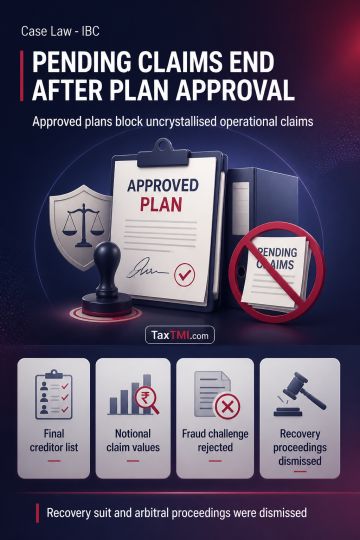
Clean slate principle extinguishes uncrystallised operational claims and bars continuation of pending recovery and arbitral proceedings after plan app...
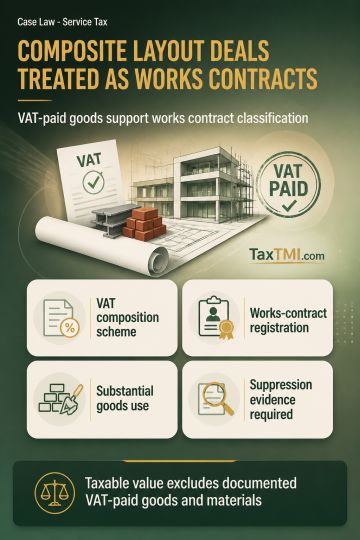
Works contract classification governs composite layout-development contracts where VAT-paid goods are transferred alongside construction and infrastru...
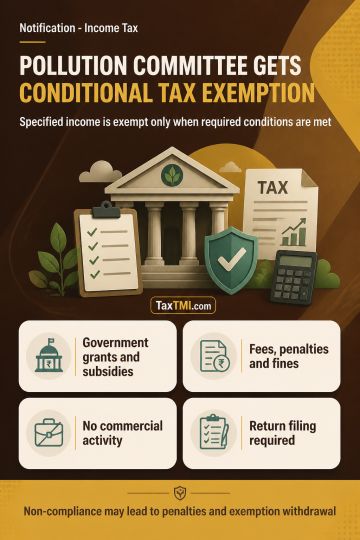
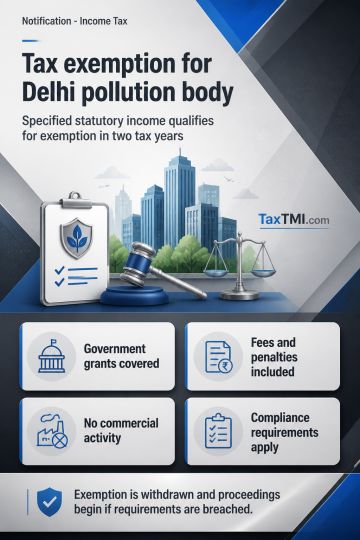
Specified income tax exemption for pollution control body remains conditional on non-commercial activity, unchanged income character, and return filin...
Applying the dominant object test, the Tribunal held that a trust whose deed showed education, scholarships, libraries and relief to the poor remained a public charitable trust even though it proposed Arabic, Islamic and Quranic instruction through a madarasa. Academic teaching of those subjects was treated as education, not religious worship, rituals or propagation, and the use of Islamic expressions or land linked to a masjid was insufficient to make the trust religious. The rejection of registration under section 12AB and approval under section 80G, based on that classification and unsupported by evidence, was set aside, and both benefits were directed to be granted.
Applying the dominant object test, the Tribunal held that a trust whose deed showed education, scholarships, libraries and relief to the poor remained a public charitable trust even though it proposed Arabic, Islamic and Quranic instruction through a madarasa. Academic teaching of those subjects was treated as education, not religious worship, rituals or propagation, and the use of Islamic expressions or land linked to a masjid was insufficient to make the trust religious. The rejection of registration under section 12AB and approval under section 80G, based on that classification and unsupported by evidence, was set aside, and both benefits were directed to be granted.
Note: It is a system-generated summary and is for quick reference only.
 TaxTMI
 of 4805






 Join Channel


 TaxTMI