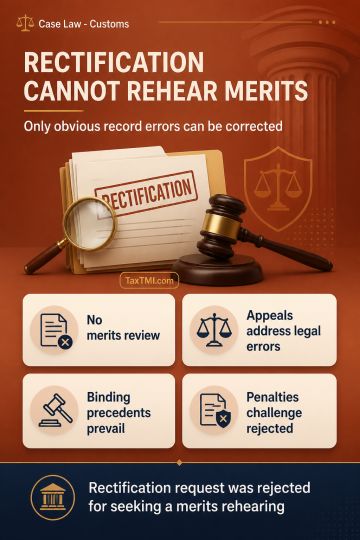
Rectification of mistake remains limited to self-evident record errors, preventing merits review through miscellaneous applications and preserving fin...
Tender creditworthiness conditions may extend to de facto Promoter Directors, with post-participation challenges generally barred absent arbitrariness...
Corporate representation in PMLA summons proceedings permitted through an authorised signatory, subject to directors' continuing cooperation and atten...
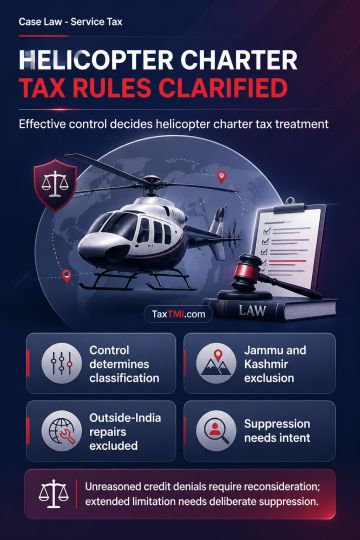
Helicopter charter classification requires effective control analysis, while territorial performance, reasoned credit orders and wilful suppression de...
Applying the dominant object test, the Tribunal held that a trust whose deed showed education, scholarships, libraries and relief to the poor remained a public charitable trust even though it proposed Arabic, Islamic and Quranic instruction through a madarasa. Academic teaching of those subjects was treated as education, not religious worship, rituals or propagation, and the use of Islamic expressions or land linked to a masjid was insufficient to make the trust religious. The rejection of registration under section 12AB and approval under section 80G, based on that classification and unsupported by evidence, was set aside, and both benefits were directed to be granted.
Applying the dominant object test, the Tribunal held that a trust whose deed showed education, scholarships, libraries and relief to the poor remained a public charitable trust even though it proposed Arabic, Islamic and Quranic instruction through a madarasa. Academic teaching of those subjects was treated as education, not religious worship, rituals or propagation, and the use of Islamic expressions or land linked to a masjid was insufficient to make the trust religious. The rejection of registration under section 12AB and approval under section 80G, based on that classification and unsupported by evidence, was set aside, and both benefits were directed to be granted.
Note: It is a system-generated summary and is for quick reference only.
 TaxTMI
 of 4807













 Join Channel


 TaxTMI