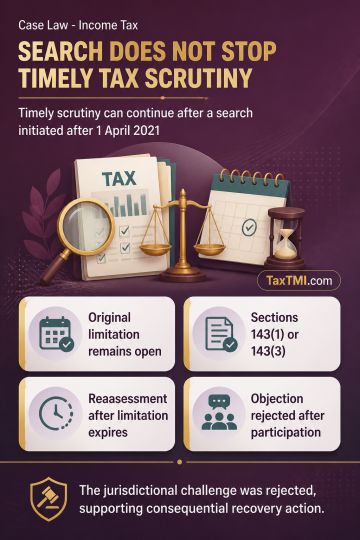
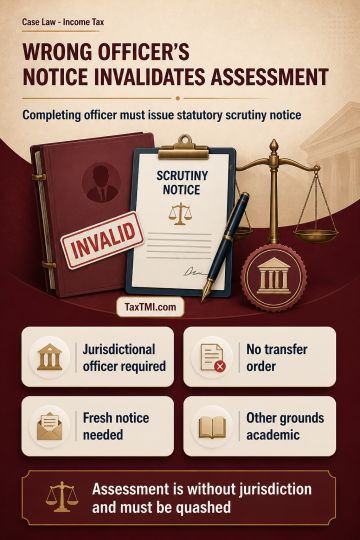
Post-search scrutiny assessment remains available where original assessment limitation is unexpired, permitting timely completion under regular assess...
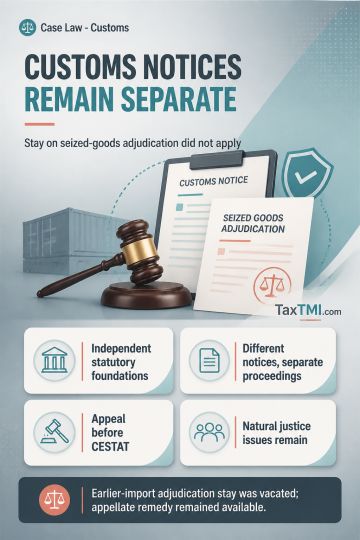
Independent show-cause notices remain separate proceedings, while customs adjudication challenges should ordinarily follow the statutory appellate rem...
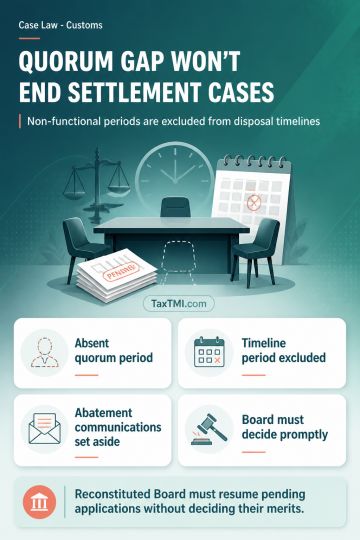
Institutional incapacity in customs settlement proceedings excludes non-functional quorum periods from statutory disposal timelines, preventing automa...
Applying the dominant object test, the Tribunal held that a trust whose deed showed education, scholarships, libraries and relief to the poor remained a public charitable trust even though it proposed Arabic, Islamic and Quranic instruction through a madarasa. Academic teaching of those subjects was treated as education, not religious worship, rituals or propagation, and the use of Islamic expressions or land linked to a masjid was insufficient to make the trust religious. The rejection of registration under section 12AB and approval under section 80G, based on that classification and unsupported by evidence, was set aside, and both benefits were directed to be granted.
Applying the dominant object test, the Tribunal held that a trust whose deed showed education, scholarships, libraries and relief to the poor remained a public charitable trust even though it proposed Arabic, Islamic and Quranic instruction through a madarasa. Academic teaching of those subjects was treated as education, not religious worship, rituals or propagation, and the use of Islamic expressions or land linked to a masjid was insufficient to make the trust religious. The rejection of registration under section 12AB and approval under section 80G, based on that classification and unsupported by evidence, was set aside, and both benefits were directed to be granted.
Note: It is a system-generated summary and is for quick reference only.
 TaxTMI
  TaxTMI
 of 4811




 Join Channel