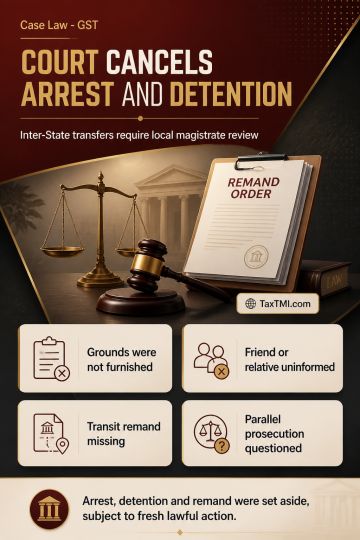
Arrest safeguards and transit remand requirements invalidated detention following inter-State transfer without communicated grounds or magistrate auth...
Arrest safeguards require disclosed grounds, relative intimation and transit remand, while duplicate prosecution under the CGST framework is unsustain...
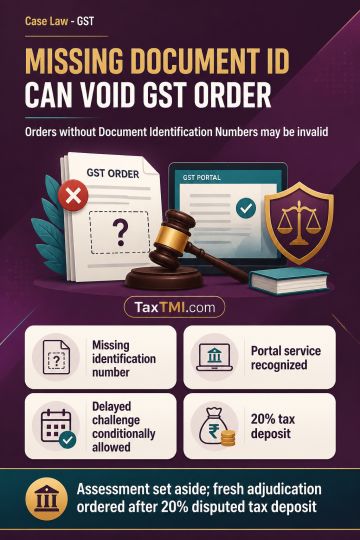
Document Identification Number defects can invalidate GST assessments, with delayed challenges entertained conditionally where patent irregularities e...
Windmill commissioning evidence supported higher depreciation where grid connection and electricity generation proved operational use before the relev...
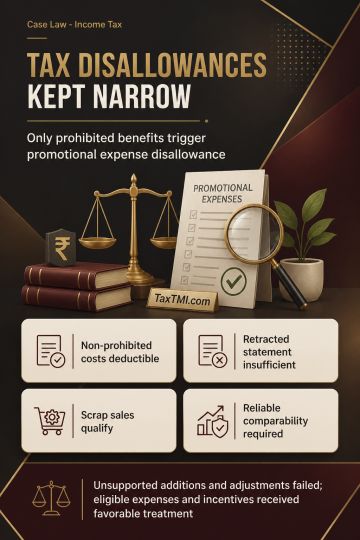
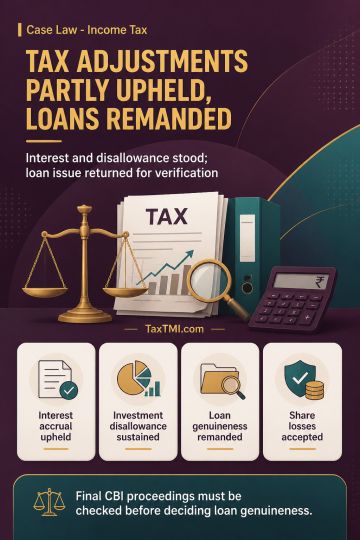
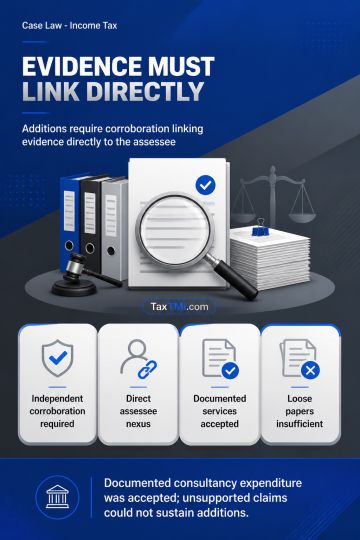
Pharmaceutical promotion and transfer-pricing comparability principles limited disallowances, while uncorroborated search allegations and unsupported ...
The Supreme Court held that inter-connected merger steps were...
Merger control notice and disclosure rules: Supreme Court limits penalties, rejects reopening of approved combination, and sets aside adverse findings.
Contents
Summary
Note
Bookmark
Share
✓ Copied successfully !
Print
Print Options
For full text, please login
Login to TaxTMI
Verification Pending
The Email Id has not been verified. Click on the link we have sent on
The Supreme Court held that inter-connected merger steps were adequately notified where the relevant agreements and their commercial linkages were placed on record and assessed in substance, so the transaction could not be treated as a complete non-notification. Section 43A could not be used as an omnibus penalty for alleged under-characterisation once a notice had been filed, reviewed and approved; any complaint of omission or false statement had to satisfy the specific ingredients of Sections 44 and 45. The Court further held that the post-one-year directions reopening the approved combination, keeping approval in abeyance and requiring a fresh Form II filing were beyond jurisdiction, lacked statutory authority, and in any event breached natural justice.
The Supreme Court held that inter-connected merger steps were adequately notified where the relevant agreements and their commercial linkages were placed on record and assessed in substance, so the transaction could not be treated as a complete non-notification. Section 43A could not be used as an omnibus penalty for alleged under-characterisation once a notice had been filed, reviewed and approved; any complaint of omission or false statement had to satisfy the specific ingredients of Sections 44 and 45. The Court further held that the post-one-year directions reopening the approved combination, keeping approval in abeyance and requiring a fresh Form II filing were beyond jurisdiction, lacked statutory authority, and in any event breached natural justice.
Note: It is a system-generated summary and is for quick reference only.
 TaxTMI
  TaxTMI
 of 4809













 Join Channel


