Interactive touchscreen panels with integrated computing functions fall under automatic data-processing machines rather than display monitors for cust...
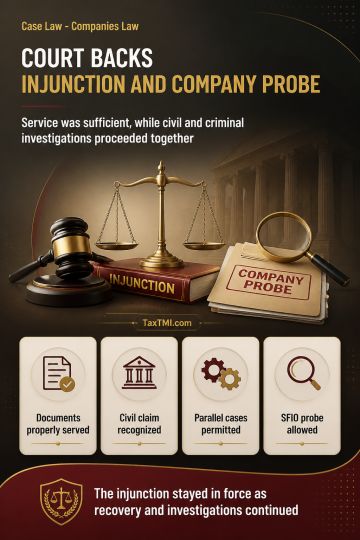
Ex parte injunction service requirements were substantially met, while civil recovery and SFIO investigation into provident fund defalcation continued...
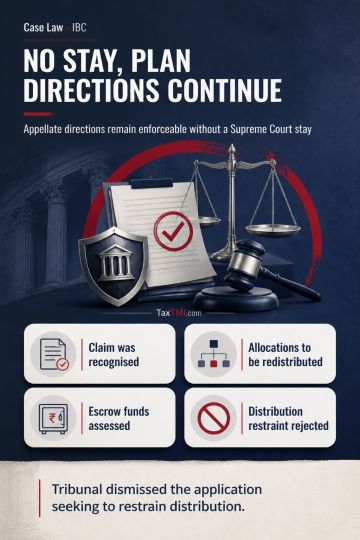
Enforcement of resolution-plan directions continues without a Supreme Court stay, preventing suspension of redistribution and escrowed-fund distributi...
Third-party ownership claims over attached property require Special Court adjudication where purchasers lack registered sale deeds and bona fides rema...
Pure-agent reimbursements in clearing and forwarding services are excluded from taxable value when qualifying third-party payments are properly record...
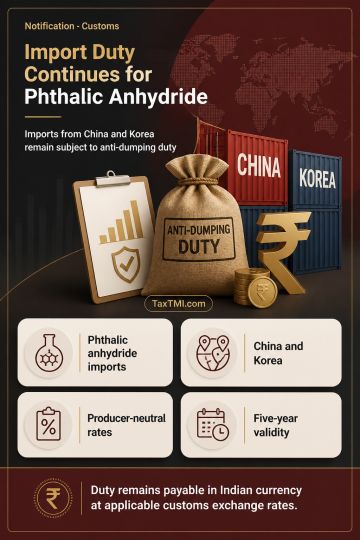
Customs relief for Strait of Hormuz maritime disruptions remains available, with existing conditions continuing unchanged through the extended validit...
The Supreme Court held that inter-connected merger steps were...
Merger control notice and disclosure rules: Supreme Court limits penalties, rejects reopening of approved combination, and sets aside adverse findings.
Contents
Summary
Note
Bookmark
Share
✓ Copied successfully !
Print
Print Options
For full text, please login
Login to TaxTMI
Verification Pending
The Email Id has not been verified. Click on the link we have sent on
The Supreme Court held that inter-connected merger steps were adequately notified where the relevant agreements and their commercial linkages were placed on record and assessed in substance, so the transaction could not be treated as a complete non-notification. Section 43A could not be used as an omnibus penalty for alleged under-characterisation once a notice had been filed, reviewed and approved; any complaint of omission or false statement had to satisfy the specific ingredients of Sections 44 and 45. The Court further held that the post-one-year directions reopening the approved combination, keeping approval in abeyance and requiring a fresh Form II filing were beyond jurisdiction, lacked statutory authority, and in any event breached natural justice.
The Supreme Court held that inter-connected merger steps were adequately notified where the relevant agreements and their commercial linkages were placed on record and assessed in substance, so the transaction could not be treated as a complete non-notification. Section 43A could not be used as an omnibus penalty for alleged under-characterisation once a notice had been filed, reviewed and approved; any complaint of omission or false statement had to satisfy the specific ingredients of Sections 44 and 45. The Court further held that the post-one-year directions reopening the approved combination, keeping approval in abeyance and requiring a fresh Form II filing were beyond jurisdiction, lacked statutory authority, and in any event breached natural justice.
Note: It is a system-generated summary and is for quick reference only.
 TaxTMI
  TaxTMI
 of 4811













 Join Channel