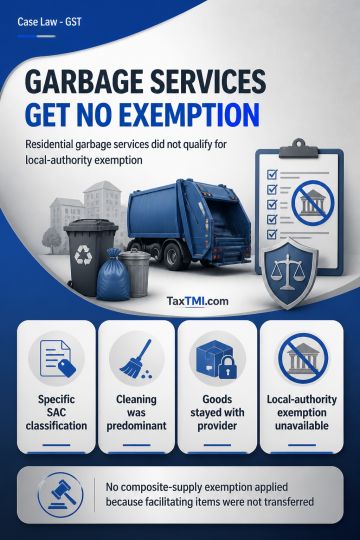
Residential waste collection classification under SAC 999423 defeats composite-supply exemption where facilitating goods are not transferred to the lo...
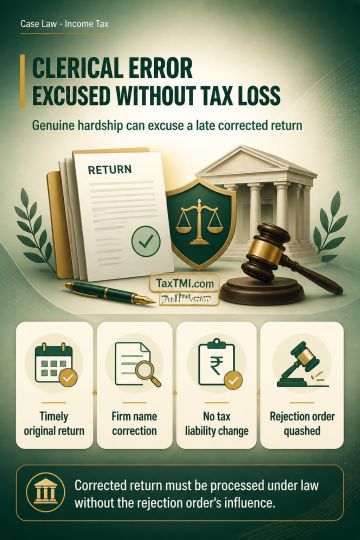
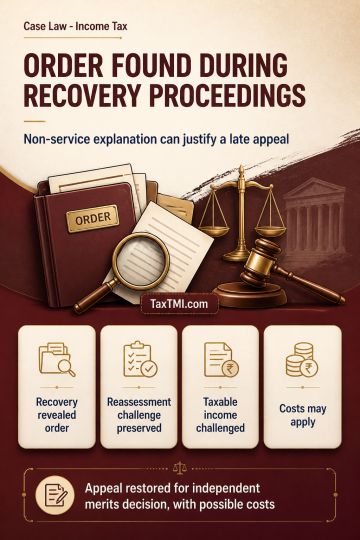
Condonation of delay permits statutory appeal restoration where inadequate service explanation prevented consideration of reassessment and taxable-inc...
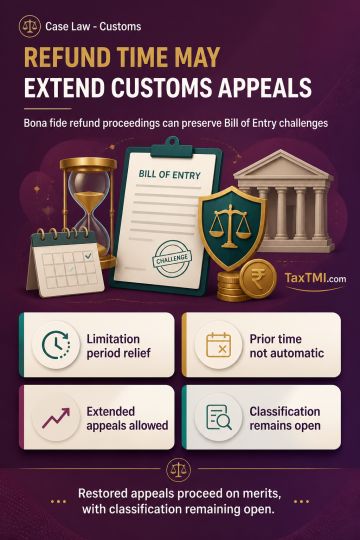
Limitation in customs appeals permits exclusion for bona fide refund proceedings, enabling restoration of Bill of Entry assessment challenges on merit...
Page of 4814
Press 'Enter' after typing page number.
441 to 460 of 96262 Results
❮
❯
❯❯
0 / 200
Expand Note
Add to Folder
No Folders have been created
+
Are you sure you want to delete "My most important" ?
The Supreme Court held that inter-connected merger steps were...
Merger control notice and disclosure rules: Supreme Court limits penalties, rejects reopening of approved combination, and sets aside adverse findings.
Contents
Summary
Note
Bookmark
Share
✓ Copied successfully !
Print
Print Options
For full text, please login
Login to TaxTMI
Verification Pending
The Email Id has not been verified. Click on the link we have sent on
The Supreme Court held that inter-connected merger steps were adequately notified where the relevant agreements and their commercial linkages were placed on record and assessed in substance, so the transaction could not be treated as a complete non-notification. Section 43A could not be used as an omnibus penalty for alleged under-characterisation once a notice had been filed, reviewed and approved; any complaint of omission or false statement had to satisfy the specific ingredients of Sections 44 and 45. The Court further held that the post-one-year directions reopening the approved combination, keeping approval in abeyance and requiring a fresh Form II filing were beyond jurisdiction, lacked statutory authority, and in any event breached natural justice.
The Supreme Court held that inter-connected merger steps were adequately notified where the relevant agreements and their commercial linkages were placed on record and assessed in substance, so the transaction could not be treated as a complete non-notification. Section 43A could not be used as an omnibus penalty for alleged under-characterisation once a notice had been filed, reviewed and approved; any complaint of omission or false statement had to satisfy the specific ingredients of Sections 44 and 45. The Court further held that the post-one-year directions reopening the approved combination, keeping approval in abeyance and requiring a fresh Form II filing were beyond jurisdiction, lacked statutory authority, and in any event breached natural justice.
Note: It is a system-generated summary and is for quick reference only.
 TaxTMI
  TaxTMI
 of 4814











 Join Channel