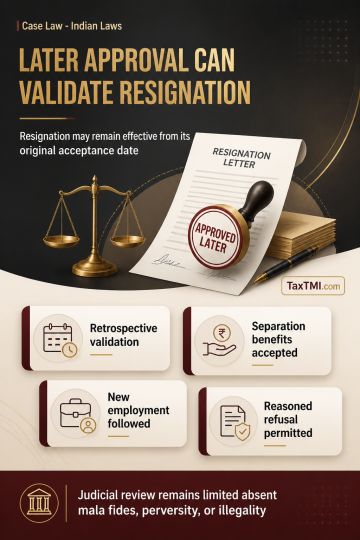
Ratification of resignation acceptance validates separation retrospectively, while withdrawal may be refused through reasoned administrative discretio...
Nature-dependent electricity contracts receive new Ind AS accounting, hedge designation, transition and financial-statement disclosure requirements fr...
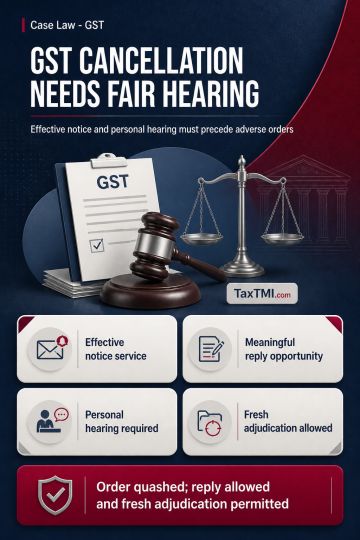
Alternative GST remedy permitted protective writ intervention for ex parte adjudication, preserving independent appellate review of input tax credit d...
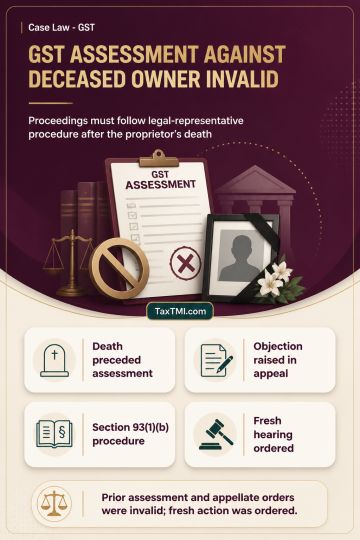
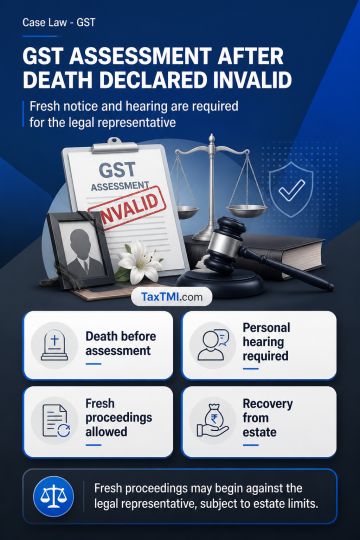
Assessment against deceased sole proprietor requires proceedings against the legal representative, rendering prior assessment and appellate orders inv...
Page of 4814
Press 'Enter' after typing page number.
421 to 440 of 96262 Results
❮
❯
❯❯
0 / 200
Expand Note
Add to Folder
No Folders have been created
+
Are you sure you want to delete "My most important" ?
The Supreme Court held that inter-connected merger steps were...
Merger control notice and disclosure rules: Supreme Court limits penalties, rejects reopening of approved combination, and sets aside adverse findings.
Contents
Summary
Note
Bookmark
Share
✓ Copied successfully !
Print
Print Options
For full text, please login
Login to TaxTMI
Verification Pending
The Email Id has not been verified. Click on the link we have sent on
The Supreme Court held that inter-connected merger steps were adequately notified where the relevant agreements and their commercial linkages were placed on record and assessed in substance, so the transaction could not be treated as a complete non-notification. Section 43A could not be used as an omnibus penalty for alleged under-characterisation once a notice had been filed, reviewed and approved; any complaint of omission or false statement had to satisfy the specific ingredients of Sections 44 and 45. The Court further held that the post-one-year directions reopening the approved combination, keeping approval in abeyance and requiring a fresh Form II filing were beyond jurisdiction, lacked statutory authority, and in any event breached natural justice.
The Supreme Court held that inter-connected merger steps were adequately notified where the relevant agreements and their commercial linkages were placed on record and assessed in substance, so the transaction could not be treated as a complete non-notification. Section 43A could not be used as an omnibus penalty for alleged under-characterisation once a notice had been filed, reviewed and approved; any complaint of omission or false statement had to satisfy the specific ingredients of Sections 44 and 45. The Court further held that the post-one-year directions reopening the approved combination, keeping approval in abeyance and requiring a fresh Form II filing were beyond jurisdiction, lacked statutory authority, and in any event breached natural justice.
Note: It is a system-generated summary and is for quick reference only.
 TaxTMI
  TaxTMI
 of 4814















 Join Channel