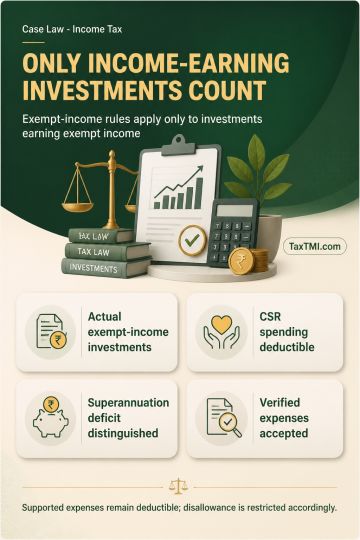
Exempt-income expenditure disallowance is confined to investments that actually generated exempt income, while supported business expenses remain dedu...
Objective characteristics and principal use govern mining-tyre classification, while fresh advance ruling applications may rely on additional technica...
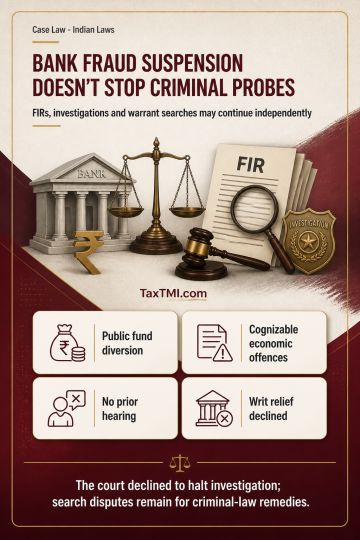
Administrative fraud classification suspension does not halt independent criminal investigation or warrant-based searches into alleged economic offenc...
Section 138 NI Act proceedings were described as quasi-criminal but predominantly criminal, with the offence lying in cheque dishonour and punishment operating mainly as deterrence rather than debt recovery. The compensatory component was treated separately, and moratorium under Part III of the IBC was held inapplicable to the criminal aspect but applicable to recovery of compensation in appropriate cases. For directors facing liability under Section 141, the use of "any debt" in Sections 96 and 101 of the IBC was read broadly to extend moratorium protection to compensatory obligations during personal insolvency. The text ends by noting that the controversy was not finally settled and was referred for authoritative consideration.
Section 138 NI Act proceedings were described as quasi-criminal but predominantly criminal, with the offence lying in cheque dishonour and punishment operating mainly as deterrence rather than debt recovery. The compensatory component was treated separately, and moratorium under Part III of the IBC was held inapplicable to the criminal aspect but applicable to recovery of compensation in appropriate cases. For directors facing liability under Section 141, the use of "any debt" in Sections 96 and 101 of the IBC was read broadly to extend moratorium protection to compensatory obligations during personal insolvency. The text ends by noting that the controversy was not finally settled and was referred for authoritative consideration.
Note: It is a system-generated summary and is for quick reference only.
 TaxTMI
 of 4805




 Join Channel


 TaxTMI