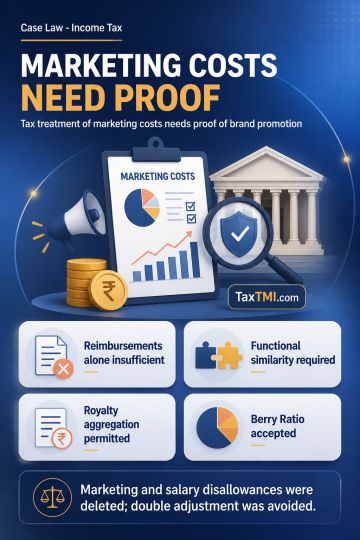
Transfer pricing requires evidence for AMP transactions, functionally reliable comparables, and appropriate aggregation or Berry Ratio benchmarking me...
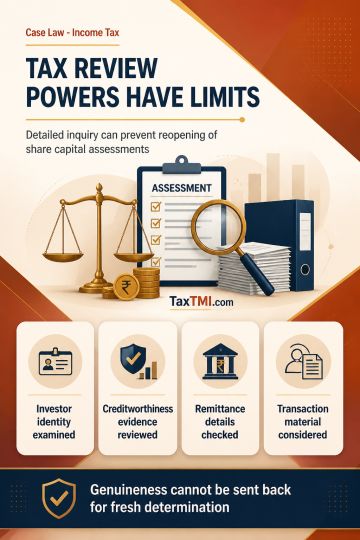
Revisionary jurisdiction cannot reopen share capital assessments where adequate inquiry supports a permissible view and no independent error is establ...
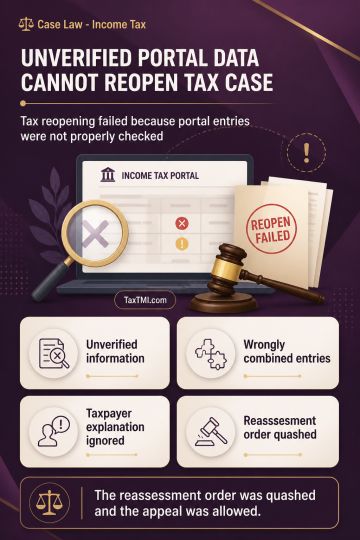
Reassessment jurisdiction fails where unverified portal information is aggregated without examining the taxpayer's explanation or relevance of entries...
Statutory sanction for delayed reassessment requires approval from the prescribed authority; approval by an inferior authority invalidates jurisdictio...
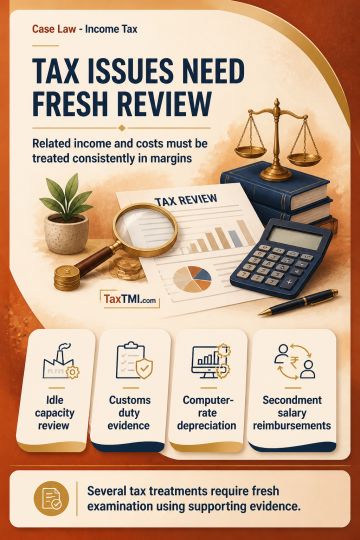
Transfer pricing margin adjustments require matching treatment of non-operating income and related costs, with comparability issues reconsidered on ev...
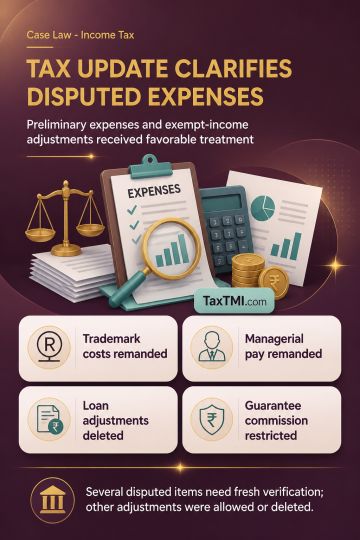
Preliminary-expense amortisation and MAT exempt-income adjustments prevailed, while trademark costs and managerial remuneration require fresh verifica...
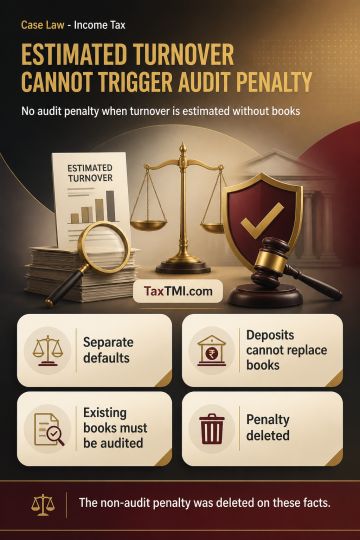
Export valuation requires contemporaneous evidence; unrelated invoices cannot prove overvaluation, and dual penalties on firm and partner are impermis...
Section 138 NI Act proceedings were described as quasi-criminal but predominantly criminal, with the offence lying in cheque dishonour and punishment operating mainly as deterrence rather than debt recovery. The compensatory component was treated separately, and moratorium under Part III of the IBC was held inapplicable to the criminal aspect but applicable to recovery of compensation in appropriate cases. For directors facing liability under Section 141, the use of "any debt" in Sections 96 and 101 of the IBC was read broadly to extend moratorium protection to compensatory obligations during personal insolvency. The text ends by noting that the controversy was not finally settled and was referred for authoritative consideration.
Section 138 NI Act proceedings were described as quasi-criminal but predominantly criminal, with the offence lying in cheque dishonour and punishment operating mainly as deterrence rather than debt recovery. The compensatory component was treated separately, and moratorium under Part III of the IBC was held inapplicable to the criminal aspect but applicable to recovery of compensation in appropriate cases. For directors facing liability under Section 141, the use of "any debt" in Sections 96 and 101 of the IBC was read broadly to extend moratorium protection to compensatory obligations during personal insolvency. The text ends by noting that the controversy was not finally settled and was referred for authoritative consideration.
Note: It is a system-generated summary and is for quick reference only.
 TaxTMI
  TaxTMI
 of 4809













 Join Channel


