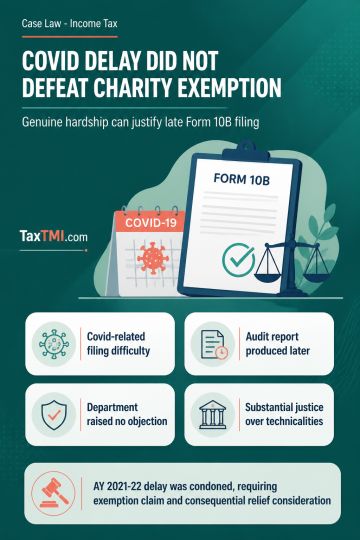
Belated Form 10B filing during Covid-19 cannot defeat charitable exemption where genuine hardship warrants condonation and substantial justice prevail...
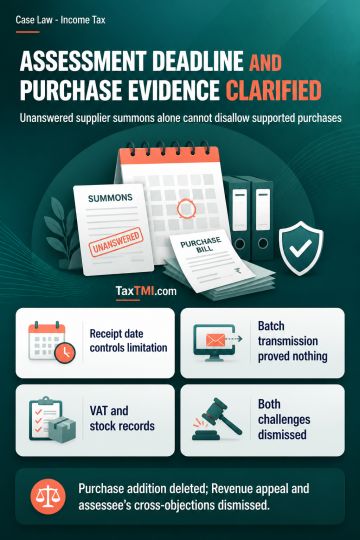
Limitation for consequential assessments runs from prescribed authority receipt, while verified purchases cannot be disallowed merely for unanswered s...
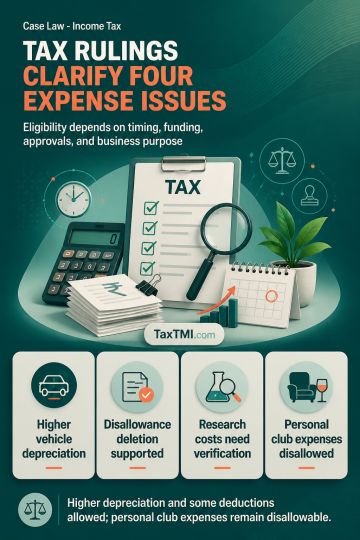
Higher depreciation for qualifying commercial vehicles, exempt-income disallowance, research deduction verification, and club-expense treatment clarif...
Charitable registration renewal cannot become an assessment of receipts, profitability or annual exemption compliance, requiring renewal and donation ...
AMP expenditure for own business is not an international transaction without an associated-enterprise arrangement, eliminating transfer pricing adjust...
Page of 4809
Press 'Enter' after typing page number.
141 to 160 of 96177 Results
❮
❯
❯❯
0 / 200
Expand Note
Add to Folder
No Folders have been created
+
Are you sure you want to delete "My most important" ?
In a GST prosecution alleging fraudulent input tax credit through fake invoices, the High Court held that the seriousness of an economic offence alone was not a sufficient ground to deny bail. Relying on Supreme Court guidance on bail and the right to speedy trial under Article 21, the Court noted that the accused had been in custody for about four months, had clean antecedents, and the case rested largely on documentary and electronic evidence. As there was no material showing a real risk of tampering with evidence, influencing witnesses, or evading trial, and the trial was unlikely to conclude soon, the Court found liberty should prevail pending trial and granted bail subject to safeguards.
In a GST prosecution alleging fraudulent input tax credit through fake invoices, the High Court held that the seriousness of an economic offence alone was not a sufficient ground to deny bail. Relying on Supreme Court guidance on bail and the right to speedy trial under Article 21, the Court noted that the accused had been in custody for about four months, had clean antecedents, and the case rested largely on documentary and electronic evidence. As there was no material showing a real risk of tampering with evidence, influencing witnesses, or evading trial, and the trial was unlikely to conclude soon, the Court found liberty should prevail pending trial and granted bail subject to safeguards.
Note: It is a system-generated summary and is for quick reference only.
 TaxTMI
  TaxTMI
 of 4809














 Join Channel