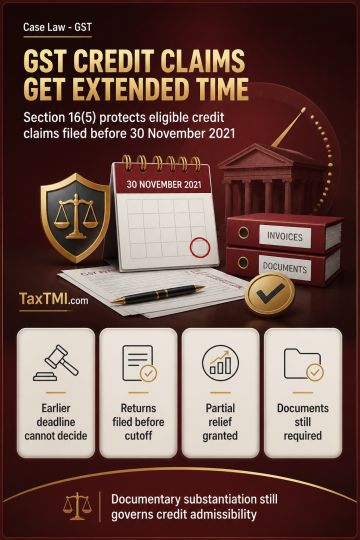
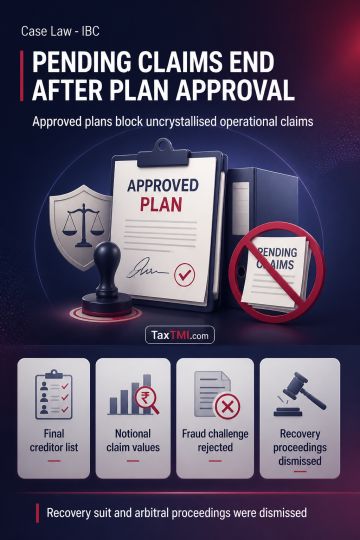
Clean slate principle extinguishes uncrystallised operational claims and bars continuation of pending recovery and arbitral proceedings after plan app...
Works contract classification governs composite layout-development contracts where VAT-paid goods are transferred alongside construction and infrastru...
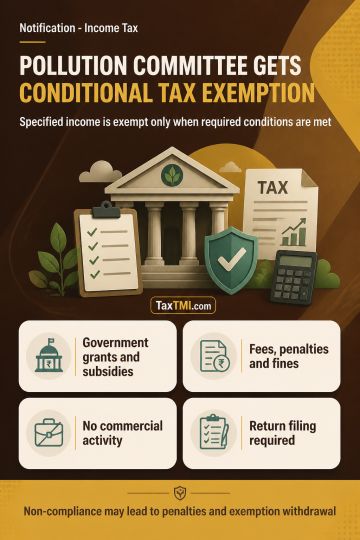
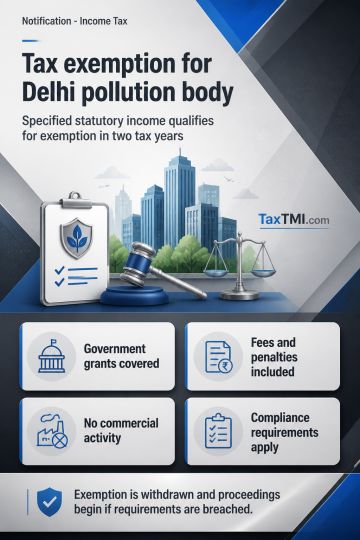
Specified income tax exemption for pollution control body remains conditional on non-commercial activity, unchanged income character, and return filin...
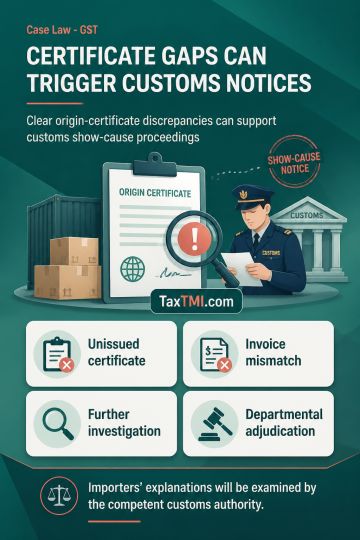
Jurisdictional facts in certificate-of-origin discrepancies can support customs show-cause proceedings, leaving factual explanations for departmental ...
HC found the arrest illegal because the mandatory safeguards were not followed: the arrest memo did not show that the grounds of arrest were furnished in writing as an annexure, the alleged grounds carried no separate CBIC-DIN, and the memo did not properly record the place of arrest or service of the grounds on the nominated relative with the prescribed details. The Court also held that the remand order was mechanical, as the Magistrate relied on the seriousness of the offence without examining whether the arrest safeguards had been complied with. On that basis, the arrest, detention and remand were quashed and habeas corpus was held maintainable despite remand.
HC found the arrest illegal because the mandatory safeguards were not followed: the arrest memo did not show that the grounds of arrest were furnished in writing as an annexure, the alleged grounds carried no separate CBIC-DIN, and the memo did not properly record the place of arrest or service of the grounds on the nominated relative with the prescribed details. The Court also held that the remand order was mechanical, as the Magistrate relied on the seriousness of the offence without examining whether the arrest safeguards had been complied with. On that basis, the arrest, detention and remand were quashed and habeas corpus was held maintainable despite remand.
Note: It is a system-generated summary and is for quick reference only.
 TaxTMI
 of 4807







 Join Channel


 TaxTMI