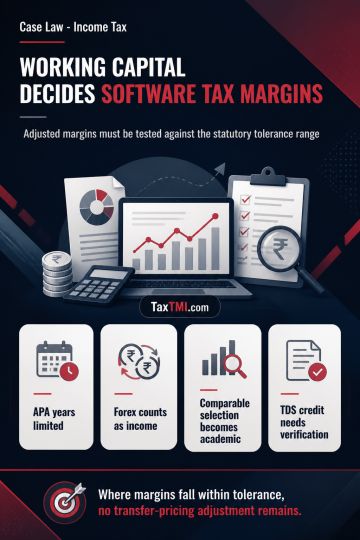
Working-capital adjustment determines whether software-services transfer-pricing margins fall within the statutory tolerance range, eliminating any ad...
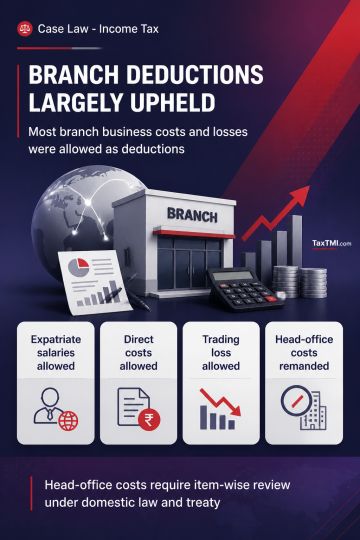
Permanent establishment deductions upheld for expatriate salaries, direct costs and trading losses, while head-office costs require fresh classificati...
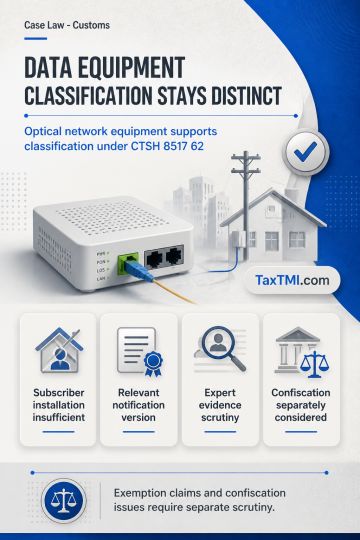
Data transmission equipment classification under CTSH 8517 62 remains distinct from residual classification, with exemption evidence requiring scrutin...
Penalty under Sections 112(a) and 112(b) of the Customs Act was unsustainable because the Revenue failed to prove the appellant's conscious involvement in the alleged smuggling or abetment with admissible evidence. The Tribunal held that the discarded statement of a co-noticee, which was not subjected to cross-examination as required under Section 138B, could not form the basis of penal action. It further found no corroboration from any seizure record, panchanama, incriminating document, financial link, communication trail, or role in import clearance. In the absence of tangible evidence connecting the appellant with the 5 live consignments or the earlier 26 consignments, both penalties were set aside.
Penalty under Sections 112(a) and 112(b) of the Customs Act was unsustainable because the Revenue failed to prove the appellant's conscious involvement in the alleged smuggling or abetment with admissible evidence. The Tribunal held that the discarded statement of a co-noticee, which was not subjected to cross-examination as required under Section 138B, could not form the basis of penal action. It further found no corroboration from any seizure record, panchanama, incriminating document, financial link, communication trail, or role in import clearance. In the absence of tangible evidence connecting the appellant with the 5 live consignments or the earlier 26 consignments, both penalties were set aside.
Note: It is a system-generated summary and is for quick reference only.
 TaxTMI
 of 4801








 Join Channel


 TaxTMI