Statutory transfer formalities invalidated alleged share and property transfers, while retrospective record manipulation constituted oppression and mi...
Provisional attachment of laundered funds and equivalent-value property sustained, with statutory protection limited to pension, gratuity and providen...
Insolvency moratorium does not shield company officers from cheque dishonour prosecution for liability arising before corporate insolvency proceedings...
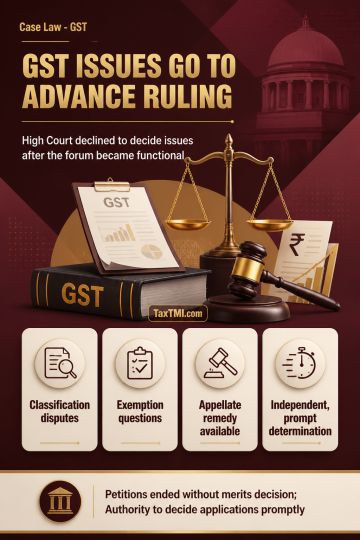
Advance-ruling mechanism governs pending GST classification, exemption and taxability disputes, limiting writ review once the specialised forum functi...
Page of 4805
Press 'Enter' after typing page number.
921 to 940 of 96092 Results
❮
❯
❯❯
0 / 200
Expand Note
Add to Folder
No Folders have been created
+
Are you sure you want to delete "My most important" ?
The Appellate Tribunal upheld the finding that a security deposit had been adjusted against lease rentals during the moratorium, but held that any restoration of that amount must be pursued before the Adjudicating Authority in appropriate proceedings. It also set aside the impugned order on fraudulent trading because material documents bearing on supply of machinery under the master lease arrangement had not been properly considered; the matter was remanded for fresh adjudication after permitting further evidence. The Tribunal further explained the different requirements under section 66(1) and section 66(2) and left open, for reconsideration on remand, whether a third party could be directed to contribute to the corporate debtor's assets.
The Appellate Tribunal upheld the finding that a security deposit had been adjusted against lease rentals during the moratorium, but held that any restoration of that amount must be pursued before the Adjudicating Authority in appropriate proceedings. It also set aside the impugned order on fraudulent trading because material documents bearing on supply of machinery under the master lease arrangement had not been properly considered; the matter was remanded for fresh adjudication after permitting further evidence. The Tribunal further explained the different requirements under section 66(1) and section 66(2) and left open, for reconsideration on remand, whether a third party could be directed to contribute to the corporate debtor's assets.
Note: It is a system-generated summary and is for quick reference only.
 TaxTMI
 of 4805



















 Join Channel


 TaxTMI