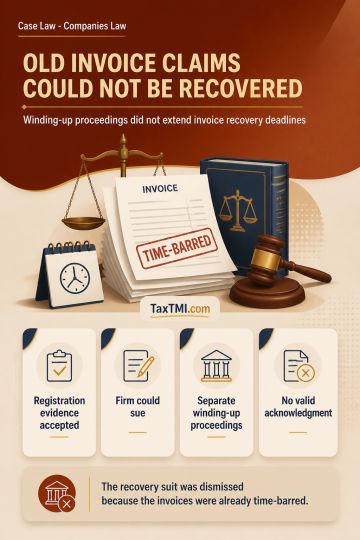
Invoice-based recovery claims remain time-barred despite separate winding-up proceedings, absent valid acknowledgment or part-payment of the disputed ...
Extended limitation fails without specific suppression allegations, while overseas employee secondment remains taxable as manpower supply within norma...
Time-share accommodation classification excludes Club or Association Service where purchasers receive contractual occupancy rights without genuine mem...
CENVAT credit for trading requires reversal, while taxable-service rental credit remains proportionately available and limitation issues await resolut...
Page of 4792
Press 'Enter' after typing page number.
61 to 80 of 95833 Results
❮
❯
❯❯
0 / 200
Expand Note
Add to Folder
No Folders have been created
+
Are you sure you want to delete "My most important" ?
The Appellate Tribunal upheld the finding that a security deposit had been adjusted against lease rentals during the moratorium, but held that any restoration of that amount must be pursued before the Adjudicating Authority in appropriate proceedings. It also set aside the impugned order on fraudulent trading because material documents bearing on supply of machinery under the master lease arrangement had not been properly considered; the matter was remanded for fresh adjudication after permitting further evidence. The Tribunal further explained the different requirements under section 66(1) and section 66(2) and left open, for reconsideration on remand, whether a third party could be directed to contribute to the corporate debtor's assets.
The Appellate Tribunal upheld the finding that a security deposit had been adjusted against lease rentals during the moratorium, but held that any restoration of that amount must be pursued before the Adjudicating Authority in appropriate proceedings. It also set aside the impugned order on fraudulent trading because material documents bearing on supply of machinery under the master lease arrangement had not been properly considered; the matter was remanded for fresh adjudication after permitting further evidence. The Tribunal further explained the different requirements under section 66(1) and section 66(2) and left open, for reconsideration on remand, whether a third party could be directed to contribute to the corporate debtor's assets.
Note: It is a system-generated summary and is for quick reference only.
 TaxTMI
 of 4792



















 Join Channel


 TaxTMI

