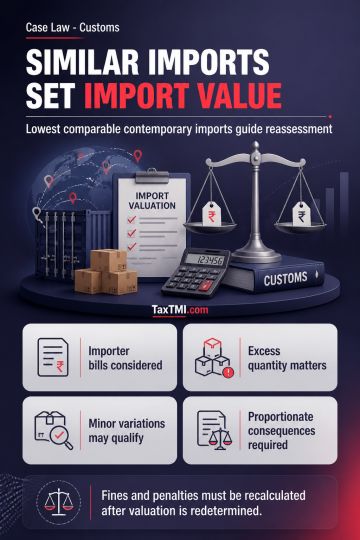
Customs valuation must use comparable contemporary imports, while confiscation fines and penalties require proportionate recalculation on reassessed v...
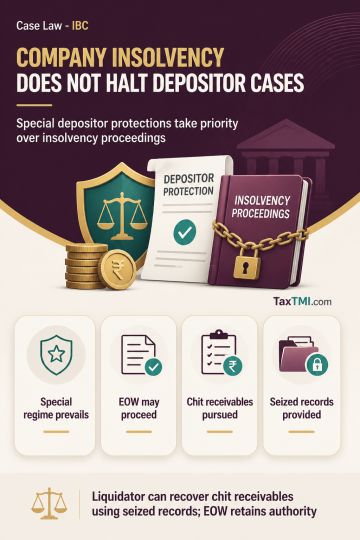
Depositor-protection proceedings prevail over corporate insolvency, while liquidators may recover chit receivables using copies of seized company reco...
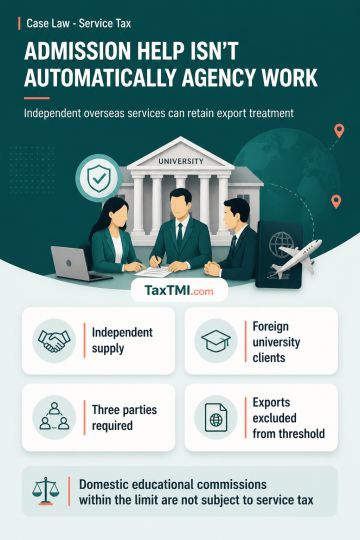
Intermediary service classification fails where overseas admission facilitation is supplied independently, preserving export treatment and small-provi...
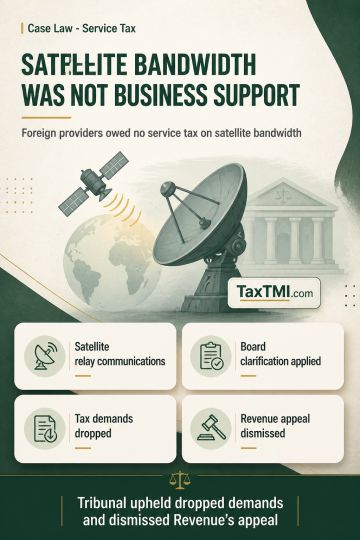
Satellite transponder bandwidth is telecommunication, not Business Support Service; foreign non-telegraph providers triggered no service tax liability...
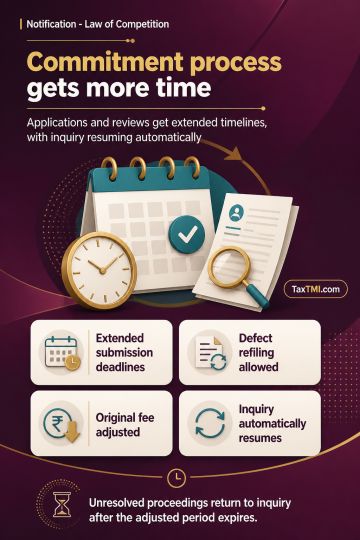
Commitment proceedings gain extended timelines, structured defect refiling, and automatic resumption of inquiry after the adjusted completion period e...
Remuneration paid to whole-time directors was treated as outside the service tax net because the employment agreements, express employer-employee clauses, TDS under section 192, and Form 16 supported an employee relationship; variable or profit-linked pay did not change that character, so the demand, interest and penalties on that remuneration failed. Remuneration paid to non-whole-time directors was also not taxable on the facts shown, because the appellant had produced ST-3 returns indicating tax was discharged by its Bhubaneswar office, the Revenue did not rebut that evidence, and no centralized registration existed to justify a demand from the Salem office. Derivative demands based on an earlier set-aside notice, without independent evidence, could not survive, so the common orders were set aside in entirety.
Remuneration paid to whole-time directors was treated as outside the service tax net because the employment agreements, express employer-employee clauses, TDS under section 192, and Form 16 supported an employee relationship; variable or profit-linked pay did not change that character, so the demand, interest and penalties on that remuneration failed. Remuneration paid to non-whole-time directors was also not taxable on the facts shown, because the appellant had produced ST-3 returns indicating tax was discharged by its Bhubaneswar office, the Revenue did not rebut that evidence, and no centralized registration existed to justify a demand from the Salem office. Derivative demands based on an earlier set-aside notice, without independent evidence, could not survive, so the common orders were set aside in entirety.
Note: It is a system-generated summary and is for quick reference only.
 TaxTMI
  TaxTMI
 of 4809






 Join Channel