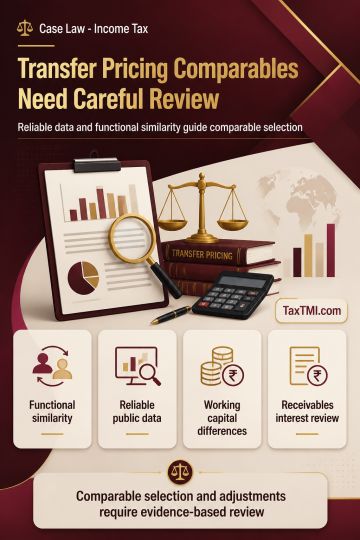
Transfer pricing comparability requires functional alignment, reliable financial data, and careful review of working capital and receivables adjustmen...
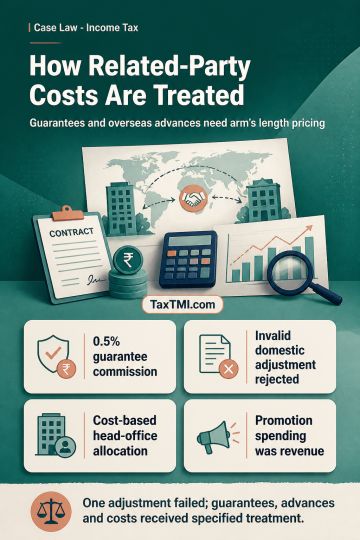
Transfer pricing rules require benchmarking corporate guarantees and associated-enterprise advances, while invalid domestic-transaction adjustments ca...
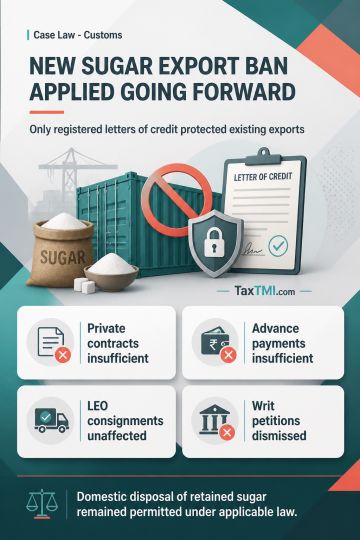
Prospective sugar export prohibition required registered letters of credit; private contracts and export quotas created no enforceable continuation ri...
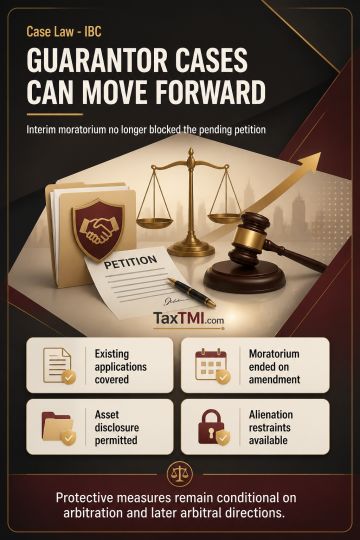
Retroactive interim-moratorium exclusion permits protective asset disclosure and preservation measures against personal guarantors pending arbitration...
Remuneration paid to whole-time directors was treated as outside the service tax net because the employment agreements, express employer-employee clauses, TDS under section 192, and Form 16 supported an employee relationship; variable or profit-linked pay did not change that character, so the demand, interest and penalties on that remuneration failed. Remuneration paid to non-whole-time directors was also not taxable on the facts shown, because the appellant had produced ST-3 returns indicating tax was discharged by its Bhubaneswar office, the Revenue did not rebut that evidence, and no centralized registration existed to justify a demand from the Salem office. Derivative demands based on an earlier set-aside notice, without independent evidence, could not survive, so the common orders were set aside in entirety.
Remuneration paid to whole-time directors was treated as outside the service tax net because the employment agreements, express employer-employee clauses, TDS under section 192, and Form 16 supported an employee relationship; variable or profit-linked pay did not change that character, so the demand, interest and penalties on that remuneration failed. Remuneration paid to non-whole-time directors was also not taxable on the facts shown, because the appellant had produced ST-3 returns indicating tax was discharged by its Bhubaneswar office, the Revenue did not rebut that evidence, and no centralized registration existed to justify a demand from the Salem office. Derivative demands based on an earlier set-aside notice, without independent evidence, could not survive, so the common orders were set aside in entirety.
Note: It is a system-generated summary and is for quick reference only.
 TaxTMI
 of 4807









 Join Channel


 TaxTMI