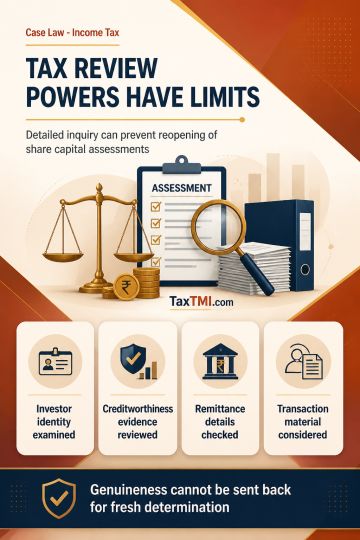
Revisionary jurisdiction cannot reopen share capital assessments where adequate inquiry supports a permissible view and no independent error is establ...
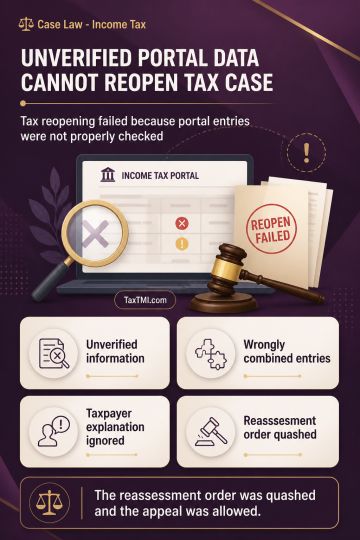
Reassessment jurisdiction fails where unverified portal information is aggregated without examining the taxpayer's explanation or relevance of entries...
Statutory sanction for delayed reassessment requires approval from the prescribed authority; approval by an inferior authority invalidates jurisdictio...
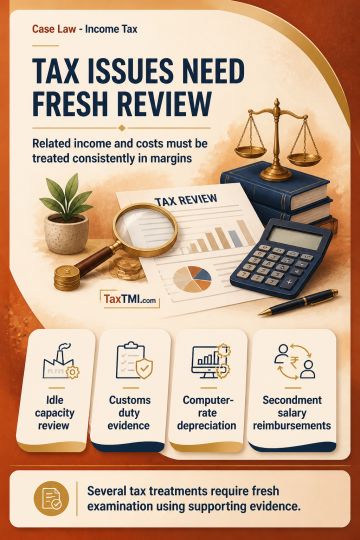
Transfer pricing margin adjustments require matching treatment of non-operating income and related costs, with comparability issues reconsidered on ev...
Preliminary-expense amortisation and MAT exempt-income adjustments prevailed, while trademark costs and managerial remuneration require fresh verifica...
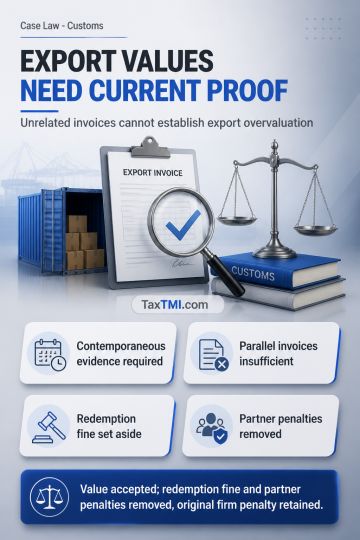
Export valuation requires contemporaneous evidence; unrelated invoices cannot prove overvaluation, and dual penalties on firm and partner are impermis...
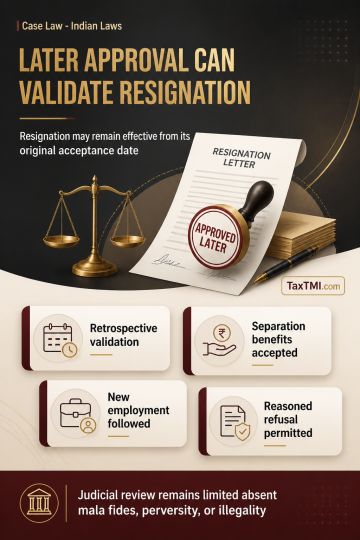
Ratification of resignation acceptance validates separation retrospectively, while withdrawal may be refused through reasoned administrative discretio...
Page of 4809
Press 'Enter' after typing page number.
321 to 340 of 96174 Results
❮
❯
❯❯
0 / 200
Expand Note
Add to Folder
No Folders have been created
+
Are you sure you want to delete "My most important" ?
Remuneration paid to whole-time directors was treated as outside the service tax net because the employment agreements, express employer-employee clauses, TDS under section 192, and Form 16 supported an employee relationship; variable or profit-linked pay did not change that character, so the demand, interest and penalties on that remuneration failed. Remuneration paid to non-whole-time directors was also not taxable on the facts shown, because the appellant had produced ST-3 returns indicating tax was discharged by its Bhubaneswar office, the Revenue did not rebut that evidence, and no centralized registration existed to justify a demand from the Salem office. Derivative demands based on an earlier set-aside notice, without independent evidence, could not survive, so the common orders were set aside in entirety.
Remuneration paid to whole-time directors was treated as outside the service tax net because the employment agreements, express employer-employee clauses, TDS under section 192, and Form 16 supported an employee relationship; variable or profit-linked pay did not change that character, so the demand, interest and penalties on that remuneration failed. Remuneration paid to non-whole-time directors was also not taxable on the facts shown, because the appellant had produced ST-3 returns indicating tax was discharged by its Bhubaneswar office, the Revenue did not rebut that evidence, and no centralized registration existed to justify a demand from the Salem office. Derivative demands based on an earlier set-aside notice, without independent evidence, could not survive, so the common orders were set aside in entirety.
Note: It is a system-generated summary and is for quick reference only.
 TaxTMI
  TaxTMI
 of 4809













 Join Channel


