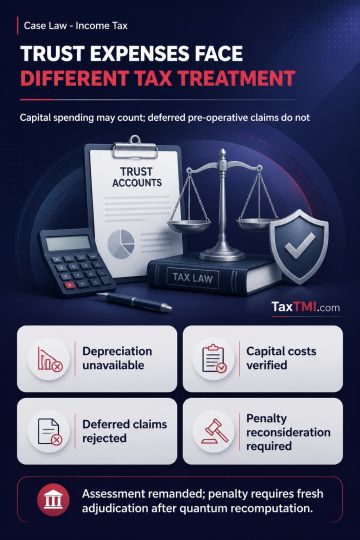
Charitable trust income application permits verified capital expenditure but rejects deferred pre-operative claims and requires reconsideration of con...
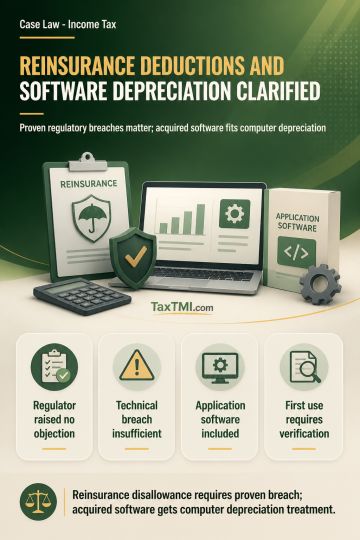
Reinsurance premium deductions require established regulatory breaches, while independently acquired software qualifies within the computer depreciati...
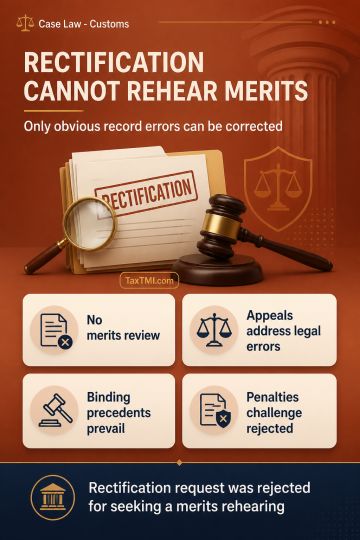
Rectification of mistake remains limited to self-evident record errors, preventing merits review through miscellaneous applications and preserving fin...
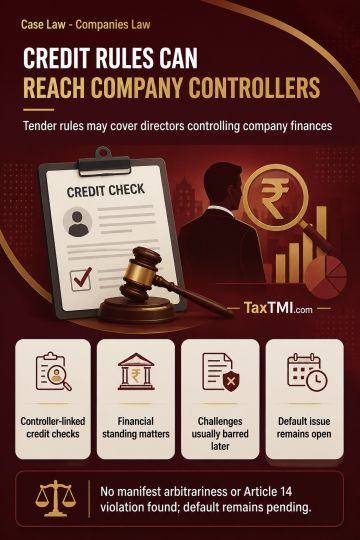
Tender creditworthiness conditions may extend to de facto Promoter Directors, with post-participation challenges generally barred absent arbitrariness...
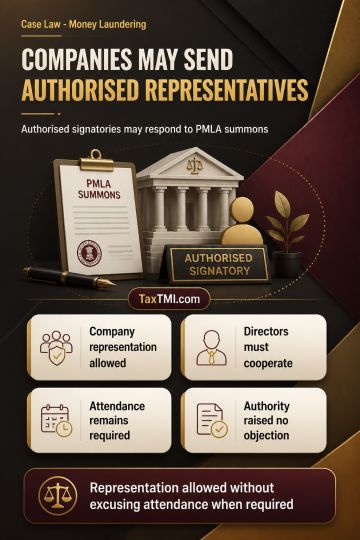
Corporate representation in PMLA summons proceedings permitted through an authorised signatory, subject to directors' continuing cooperation and atten...
Proof of demand is the gravamen of offences under Sections 7 and 13 of the Prevention of Corruption Act, and recovery of tainted money alone is insufficient without reliable evidence of demand and voluntary acceptance. The Supreme Court upheld the acquittal because the prosecution failed to establish the foundational facts beyond reasonable doubt, material witnesses did not support its case in material particulars, and the statutory presumption under Section 20 could not be invoked. The conspiracy charge also failed because there was no cogent evidence of prior agreement or meeting of minds. The Court further accepted an adverse inference from the non-production of the alleged tape-recorded conversation and declined to interfere with the High Court's plausible view.
Proof of demand is the gravamen of offences under Sections 7 and 13 of the Prevention of Corruption Act, and recovery of tainted money alone is insufficient without reliable evidence of demand and voluntary acceptance. The Supreme Court upheld the acquittal because the prosecution failed to establish the foundational facts beyond reasonable doubt, material witnesses did not support its case in material particulars, and the statutory presumption under Section 20 could not be invoked. The conspiracy charge also failed because there was no cogent evidence of prior agreement or meeting of minds. The Court further accepted an adverse inference from the non-production of the alleged tape-recorded conversation and declined to interfere with the High Court's plausible view.
Note: It is a system-generated summary and is for quick reference only.
 TaxTMI
  TaxTMI
 of 4807





 Join Channel


