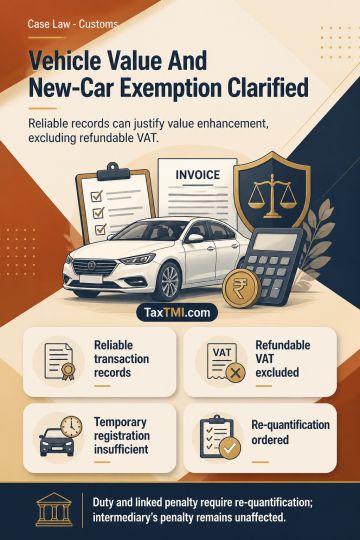
Transaction value rejection requires reliable corroboration; refundable VAT is excluded and temporary registration does not defeat new-vehicle exempti...
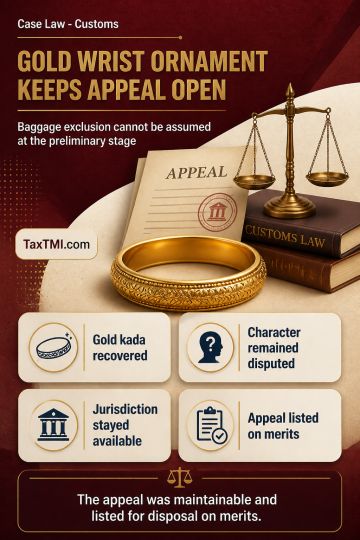
Appellate jurisdiction remains available where a wrist-worn gold ornament cannot conclusively be characterised as imported baggage at the preliminary ...
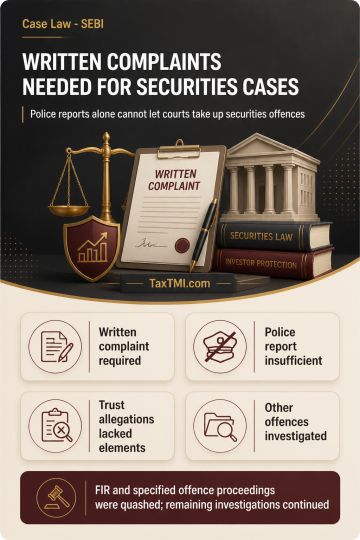
Written complaint requirement bars cognizance on police reports for securities offences, while unsupported breach of trust and cheating allegations fa...
Risk-based postal import clearance standardises electronic assessment, document requests, duty realisation and delivery controls at Foreign Post Offic...
Customs Cargo Service Provider appointment extends custodianship to additional terminal land, subject to cargo-control, security and licence condition...
Proof of demand is the gravamen of offences under Sections 7 and 13 of the Prevention of Corruption Act, and recovery of tainted money alone is insufficient without reliable evidence of demand and voluntary acceptance. The Supreme Court upheld the acquittal because the prosecution failed to establish the foundational facts beyond reasonable doubt, material witnesses did not support its case in material particulars, and the statutory presumption under Section 20 could not be invoked. The conspiracy charge also failed because there was no cogent evidence of prior agreement or meeting of minds. The Court further accepted an adverse inference from the non-production of the alleged tape-recorded conversation and declined to interfere with the High Court's plausible view.
Proof of demand is the gravamen of offences under Sections 7 and 13 of the Prevention of Corruption Act, and recovery of tainted money alone is insufficient without reliable evidence of demand and voluntary acceptance. The Supreme Court upheld the acquittal because the prosecution failed to establish the foundational facts beyond reasonable doubt, material witnesses did not support its case in material particulars, and the statutory presumption under Section 20 could not be invoked. The conspiracy charge also failed because there was no cogent evidence of prior agreement or meeting of minds. The Court further accepted an adverse inference from the non-production of the alleged tape-recorded conversation and declined to interfere with the High Court's plausible view.
Note: It is a system-generated summary and is for quick reference only.
 TaxTMI
  TaxTMI
 of 4811







 Join Channel