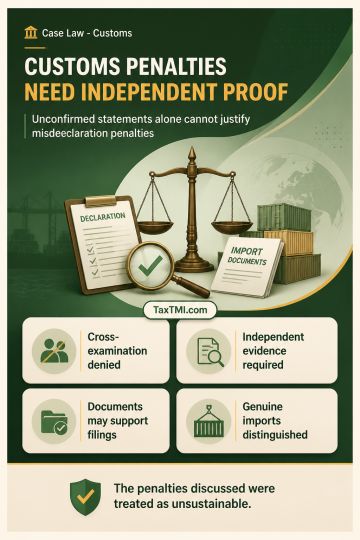
Cross-examination rights and corroborated evidence limit customs penalties for misdeclaration in genuine import transactions involving documented clea...
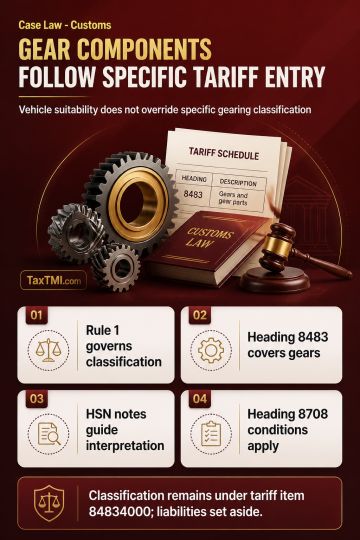
Tariff classification of vehicle gear components follows the specific gearing entry, displacing motor-vehicle parts classification and related liabili...
Necessary-party requirements limit impleadment of independent entities, while deferred consideration does not create an appealable adverse determinati...
Food supplement classification requires common parlance and authoritative tests, preventing treatment as proprietary Ayurvedic medicines without suppo...
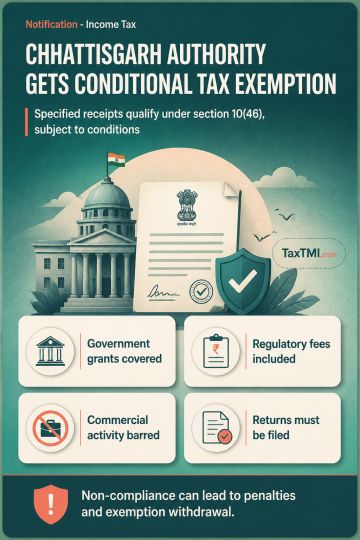
Specified regulatory authority income receives conditional tax exemption, subject to non-commercial activity, unchanged income character, and return f...
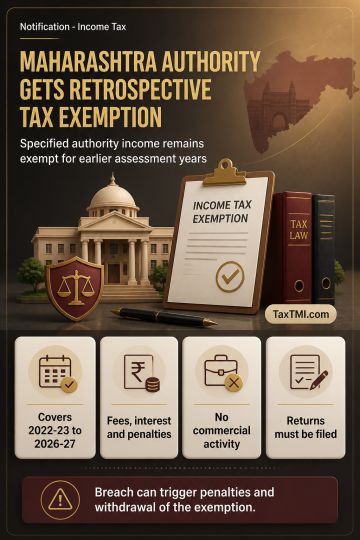
Tax exemption for regulatory authority income applies retrospectively, subject to non-commercial activity, unchanged income sources, and return-filing...
An assessment order under the GST regime was held vitiated because it did not bear a Document Identification Number, following the Court's earlier view that absence of a DIN invalidates the order. The order was therefore set aside and the matter remanded for fresh assessment after hearing the taxpayer. On the delayed writ challenge and disputed portal service, the Court did not finally resolve the service controversy but held that petitions attacking assessment orders with patent irregularities could be entertained on terms. Relief was made conditional on deposit of 20% of the disputed tax, with the period of writ pendency excluded for limitation and liberty preserved to raise all contentions before the Assessing Officer.
An assessment order under the GST regime was held vitiated because it did not bear a Document Identification Number, following the Court's earlier view that absence of a DIN invalidates the order. The order was therefore set aside and the matter remanded for fresh assessment after hearing the taxpayer. On the delayed writ challenge and disputed portal service, the Court did not finally resolve the service controversy but held that petitions attacking assessment orders with patent irregularities could be entertained on terms. Relief was made conditional on deposit of 20% of the disputed tax, with the period of writ pendency excluded for limitation and liberty preserved to raise all contentions before the Assessing Officer.
Note: It is a system-generated summary and is for quick reference only.
 TaxTMI
  TaxTMI
 of 4809
















 Join Channel