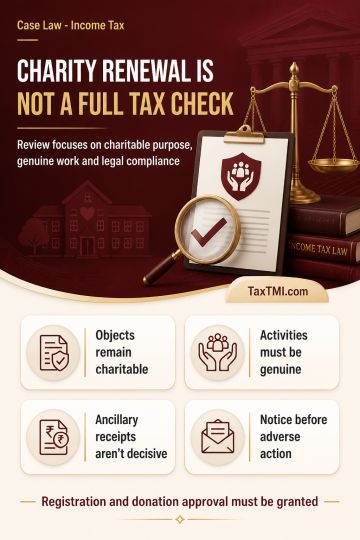
Charitable registration renewal cannot become an assessment of receipts, profitability or annual exemption compliance, requiring renewal and donation ...
AMP expenditure for own business is not an international transaction without an associated-enterprise arrangement, eliminating transfer pricing adjust...
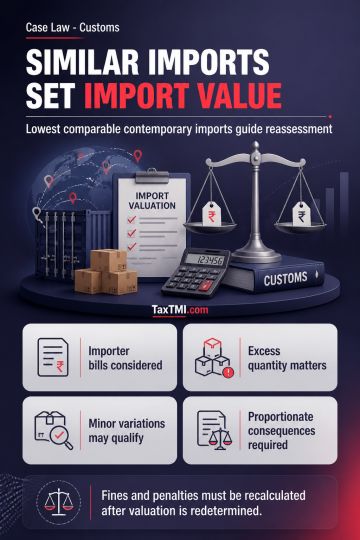
Customs valuation must use comparable contemporary imports, while confiscation fines and penalties require proportionate recalculation on reassessed v...
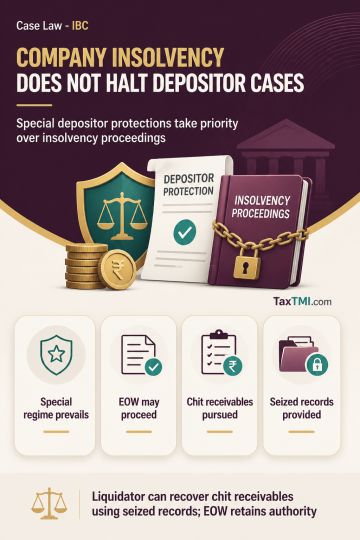
Depositor-protection proceedings prevail over corporate insolvency, while liquidators may recover chit receivables using copies of seized company reco...
Intermediary service classification fails where overseas admission facilitation is supplied independently, preserving export treatment and small-provi...
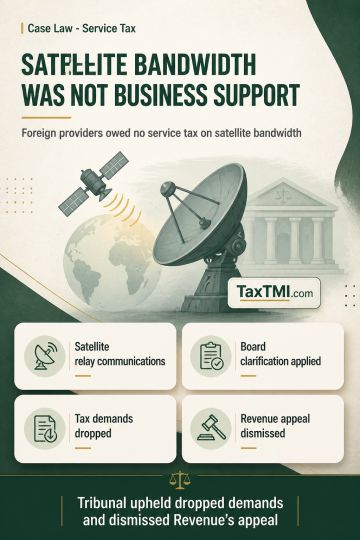
Satellite transponder bandwidth is telecommunication, not Business Support Service; foreign non-telegraph providers triggered no service tax liability...
An assessment order under the GST regime was held vitiated because it did not bear a Document Identification Number, following the Court's earlier view that absence of a DIN invalidates the order. The order was therefore set aside and the matter remanded for fresh assessment after hearing the taxpayer. On the delayed writ challenge and disputed portal service, the Court did not finally resolve the service controversy but held that petitions attacking assessment orders with patent irregularities could be entertained on terms. Relief was made conditional on deposit of 20% of the disputed tax, with the period of writ pendency excluded for limitation and liberty preserved to raise all contentions before the Assessing Officer.
An assessment order under the GST regime was held vitiated because it did not bear a Document Identification Number, following the Court's earlier view that absence of a DIN invalidates the order. The order was therefore set aside and the matter remanded for fresh assessment after hearing the taxpayer. On the delayed writ challenge and disputed portal service, the Court did not finally resolve the service controversy but held that petitions attacking assessment orders with patent irregularities could be entertained on terms. Relief was made conditional on deposit of 20% of the disputed tax, with the period of writ pendency excluded for limitation and liberty preserved to raise all contentions before the Assessing Officer.
Note: It is a system-generated summary and is for quick reference only.
 TaxTMI
  TaxTMI
 of 4814








 Join Channel


