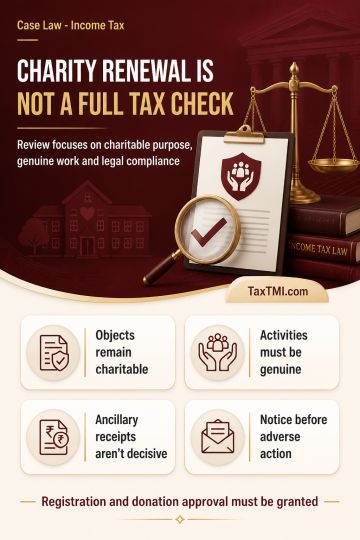
Charitable registration renewal cannot become an assessment of receipts, profitability or annual exemption compliance, requiring renewal and donation ...
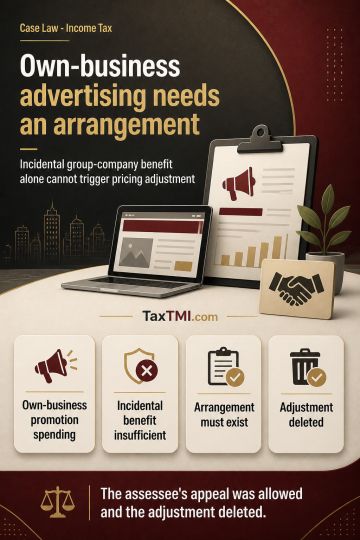
AMP expenditure for own business is not an international transaction without an associated-enterprise arrangement, eliminating transfer pricing adjust...
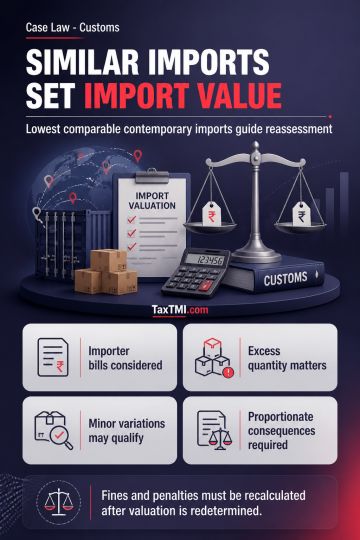
Customs valuation must use comparable contemporary imports, while confiscation fines and penalties require proportionate recalculation on reassessed v...
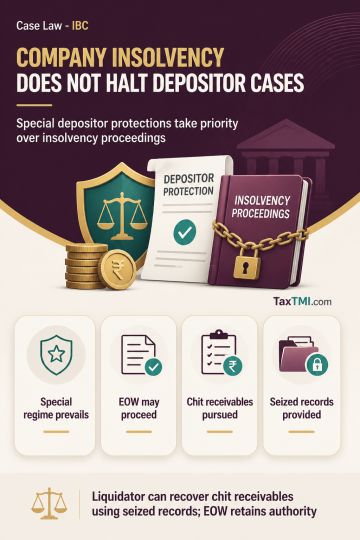
Depositor-protection proceedings prevail over corporate insolvency, while liquidators may recover chit receivables using copies of seized company reco...
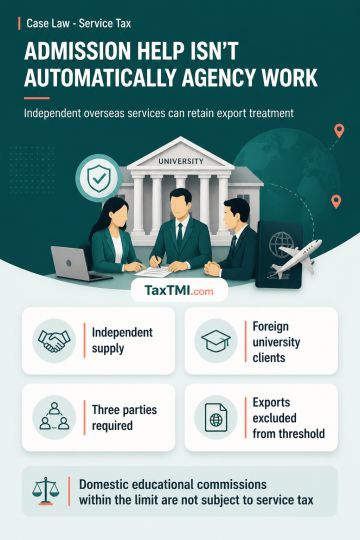
Intermediary service classification fails where overseas admission facilitation is supplied independently, preserving export treatment and small-provi...
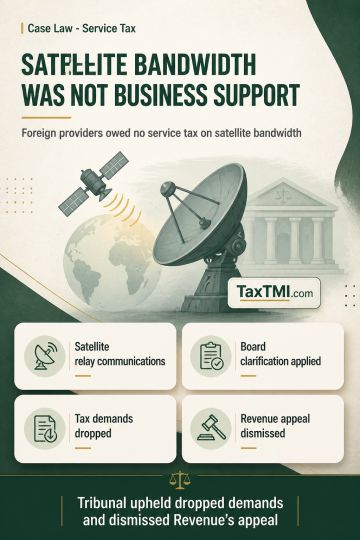
Satellite transponder bandwidth is telecommunication, not Business Support Service; foreign non-telegraph providers triggered no service tax liability...
AAR admitted a registered recipient's advance ruling application, relying on Calcutta HC authority that a registered person can seek ruling on merits. It held that the temple's grant of licence to collect human hair from its premises was a separate commercial arrangement, distinct from devotees' religious tonsuring, and constituted a supply of service under GST because the temple transferred a right for consideration in the course of business. The exemption for human hair as goods did not apply because the transaction was not a sale of goods but a licensed service. The question whether the temple was business premises was not answered as it fell outside the limited scope of advance ruling jurisdiction.
AAR admitted a registered recipient's advance ruling application, relying on Calcutta HC authority that a registered person can seek ruling on merits. It held that the temple's grant of licence to collect human hair from its premises was a separate commercial arrangement, distinct from devotees' religious tonsuring, and constituted a supply of service under GST because the temple transferred a right for consideration in the course of business. The exemption for human hair as goods did not apply because the transaction was not a sale of goods but a licensed service. The question whether the temple was business premises was not answered as it fell outside the limited scope of advance ruling jurisdiction.
Note: It is a system-generated summary and is for quick reference only.
 TaxTMI
  TaxTMI
 of 4814






 Join Channel


