Commercial vehicle depreciation, scientifically determined warranty provisions and exempt-income disallowances were resolved in favour of the taxpayer...
Inherited property sale proceeds require capital-gains treatment where ownership is supported by evidence, not suspicion or unverified signature doubt...
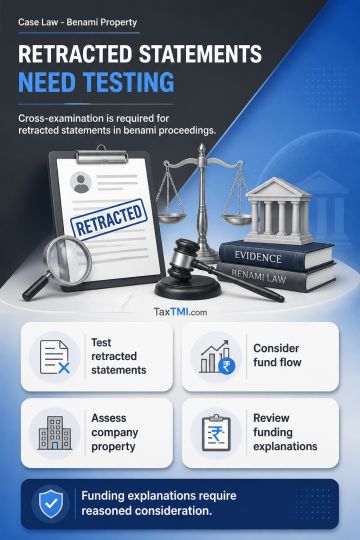
Cross-examination of retracted statements is essential where foundational evidence supports a benami allegation and documented funding explanations re...
Capital-goods exemption covers plant-modernisation accessories, while the import restriction applies only to earlier capital-goods components and spar...
Constitutional judicial review permits challenges to ECIRs and connected money-laundering proceedings where coercive action affects fundamental intere...
Contempt proceedings are quasi-criminal and, especially where civil imprisonment is sought, require strict compliance with procedure. The Tribunal held that the Adjudicating Authority had to first record prima facie satisfaction of clear and wilful disobedience and then issue a specific show-cause notice setting out the exact allegations; a routine notice calling for replies was insufficient, so the contempt finding and punishment were vitiated. It further held that personal punishment for contempt cannot be imposed against corporate entities without identifying the individual officers responsible and giving them an opportunity to defend themselves in their personal capacity. The contempt order and imprisonment direction were set aside, with liberty to revive proceedings after proper identification and fresh pleadings.
Contempt proceedings are quasi-criminal and, especially where civil imprisonment is sought, require strict compliance with procedure. The Tribunal held that the Adjudicating Authority had to first record prima facie satisfaction of clear and wilful disobedience and then issue a specific show-cause notice setting out the exact allegations; a routine notice calling for replies was insufficient, so the contempt finding and punishment were vitiated. It further held that personal punishment for contempt cannot be imposed against corporate entities without identifying the individual officers responsible and giving them an opportunity to defend themselves in their personal capacity. The contempt order and imprisonment direction were set aside, with liberty to revive proceedings after proper identification and fresh pleadings.
Note: It is a system-generated summary and is for quick reference only.
 TaxTMI
 of 4807






















 Join Channel


 TaxTMI
