Revisionary jurisdiction cannot reopen share capital assessments where adequate inquiry supports a permissible view and no independent error is establ...
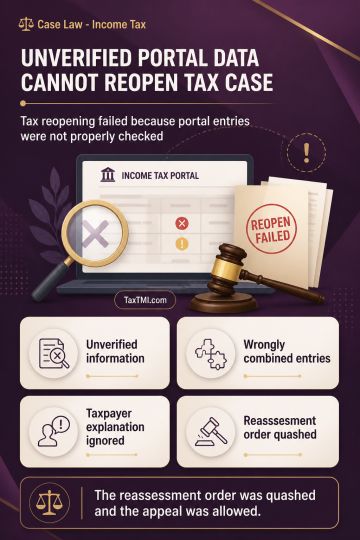
Reassessment jurisdiction fails where unverified portal information is aggregated without examining the taxpayer's explanation or relevance of entries...
Statutory sanction for delayed reassessment requires approval from the prescribed authority; approval by an inferior authority invalidates jurisdictio...
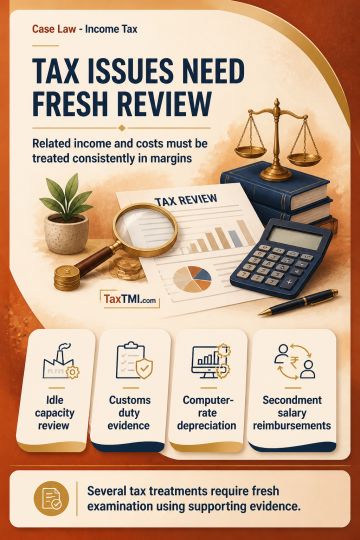
Transfer pricing margin adjustments require matching treatment of non-operating income and related costs, with comparability issues reconsidered on ev...
Preliminary-expense amortisation and MAT exempt-income adjustments prevailed, while trademark costs and managerial remuneration require fresh verifica...
Export valuation requires contemporaneous evidence; unrelated invoices cannot prove overvaluation, and dual penalties on firm and partner are impermis...
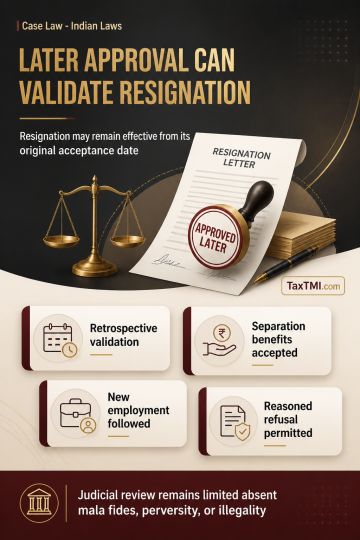
Ratification of resignation acceptance validates separation retrospectively, while withdrawal may be refused through reasoned administrative discretio...
Page of 4809
Press 'Enter' after typing page number.
321 to 340 of 96174 Results
❮
❯
❯❯
0 / 200
Expand Note
Add to Folder
No Folders have been created
+
Are you sure you want to delete "My most important" ?
Contempt proceedings are quasi-criminal and, especially where civil imprisonment is sought, require strict compliance with procedure. The Tribunal held that the Adjudicating Authority had to first record prima facie satisfaction of clear and wilful disobedience and then issue a specific show-cause notice setting out the exact allegations; a routine notice calling for replies was insufficient, so the contempt finding and punishment were vitiated. It further held that personal punishment for contempt cannot be imposed against corporate entities without identifying the individual officers responsible and giving them an opportunity to defend themselves in their personal capacity. The contempt order and imprisonment direction were set aside, with liberty to revive proceedings after proper identification and fresh pleadings.
Contempt proceedings are quasi-criminal and, especially where civil imprisonment is sought, require strict compliance with procedure. The Tribunal held that the Adjudicating Authority had to first record prima facie satisfaction of clear and wilful disobedience and then issue a specific show-cause notice setting out the exact allegations; a routine notice calling for replies was insufficient, so the contempt finding and punishment were vitiated. It further held that personal punishment for contempt cannot be imposed against corporate entities without identifying the individual officers responsible and giving them an opportunity to defend themselves in their personal capacity. The contempt order and imprisonment direction were set aside, with liberty to revive proceedings after proper identification and fresh pleadings.
Note: It is a system-generated summary and is for quick reference only.
 TaxTMI
  TaxTMI
 of 4809

















 Join Channel


