Transfer pricing and tax deductions upheld on established principles, while employee contributions and warranty provisions returned for fresh examinat...
Captive transfer pricing relies on industrial consumer tariffs, while genuine quotations can benchmark effluent treatment transfers under the Other Me...
Specific tariff classification for ophthalmic instruments and extended limitation principles determine the treatment of duty demands, confiscation, an...
Integrated golf function determines classification, placing launch monitors and simulators under other golf equipment rather than measuring instrument...
Public servant status under anti-corruption law extends to recognised stock exchange leadership; constitutional and sanction challenges do not succeed...
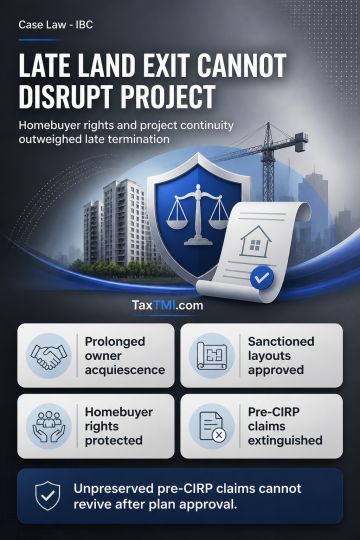
Acquiescence, homebuyer protection and clean-slate resolution principles prevent landowners from disrupting an integrated project through late termina...
Resolution professional was entitled to cooperation, project records and access from a party operating under project agreements because, once CIRP commenced, the RP had a statutory duty to preserve and protect the corporate debtor's assets. The tribunal held that the matter was not a mere contractual dispute and directed disclosure of documents and information, but declined to stop construction because continuation was necessary in the interest of stakeholders, especially homebuyers. It also held that unregistered development documents did not create title in immovable property, so the project remained with the corporate debtor, while the earlier registered mortgage over the land, units and receivables continued and was not displaced by later development arrangements.
Resolution professional was entitled to cooperation, project records and access from a party operating under project agreements because, once CIRP commenced, the RP had a statutory duty to preserve and protect the corporate debtor's assets. The tribunal held that the matter was not a mere contractual dispute and directed disclosure of documents and information, but declined to stop construction because continuation was necessary in the interest of stakeholders, especially homebuyers. It also held that unregistered development documents did not create title in immovable property, so the project remained with the corporate debtor, while the earlier registered mortgage over the land, units and receivables continued and was not displaced by later development arrangements.
Note: It is a system-generated summary and is for quick reference only.
 TaxTMI
 of 4805



















 Join Channel


 TaxTMI