Retention of seized property survives where recorded reasons support proceeds of crime, while stayed investigation periods are excluded from limitatio...
Specified income of Baddi Barotiwala Nalagarh Development Authority receives conditional tax exemption, retrospectively covering its designated assess...
Specified development authority income receives retrospective tax exemption, subject to non-commercial activity, unchanged income sources, and return-...
Unified Brand India framework introduces voluntary Trust Mark certification and funding support for export branding, packaging and global promotional ...
Origin Declaration authentication governs preferential tariff claims under India-UK CETA, requiring a validated reference number before import clearan...
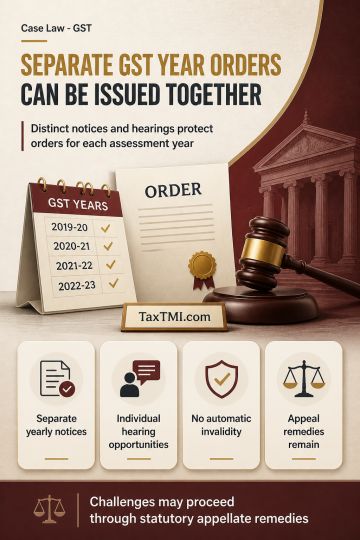
Separate assessment orders for different years remain valid when distinct notices and hearing opportunities prevent prejudice from combined proceeding...
Service tax liability prior to the Point of Taxation regime arose on actual receipt of consideration, not merely on accrual-based book figures or sundry debtors; GTA liability also rested on the service recipient under reverse charge, and the related demands were unsustainable. Classification turned on the real nature of the activity, so export cargo handling could not be taxed as Clearing and Forwarding Agent service, and pure reimbursements without profit element were excluded from value. Advances linked to GTA service were covered by reverse charge, unsecured loan receipts were not consideration for service, and detention charges were penal in nature. CENVAT credit could not be denied for clerical invoice defects where receipt and use of input services were established. A second notice on the same known facts could not invoke the extended period, and Section 78 penalty failed for want of wilful suppression.
Service tax liability prior to the Point of Taxation regime arose on actual receipt of consideration, not merely on accrual-based book figures or sundry debtors; GTA liability also rested on the service recipient under reverse charge, and the related demands were unsustainable. Classification turned on the real nature of the activity, so export cargo handling could not be taxed as Clearing and Forwarding Agent service, and pure reimbursements without profit element were excluded from value. Advances linked to GTA service were covered by reverse charge, unsecured loan receipts were not consideration for service, and detention charges were penal in nature. CENVAT credit could not be denied for clerical invoice defects where receipt and use of input services were established. A second notice on the same known facts could not invoke the extended period, and Section 78 penalty failed for want of wilful suppression.
Note: It is a system-generated summary and is for quick reference only.
 TaxTMI
 of 4805



















 Join Channel


 TaxTMI
