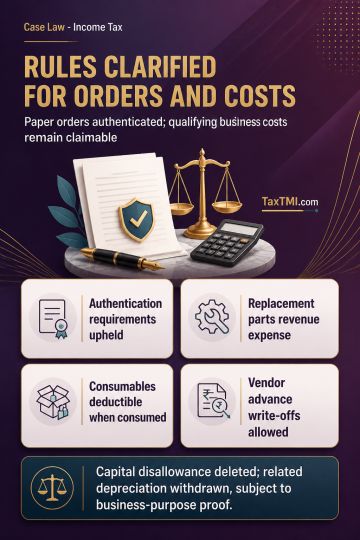
Authentication of paper assessment orders upheld, while qualifying repairs, consumables and vendor advance write-offs remain deductible business claim...
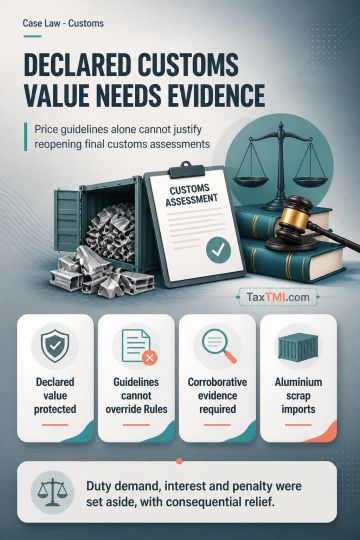
Transaction value cannot be rejected solely on non-statutory valuation guidelines without corroborative evidence supporting reassessment of final cust...
Cross-examination rights and corroborated evidence limit customs penalties for misdeclaration in genuine import transactions involving documented clea...
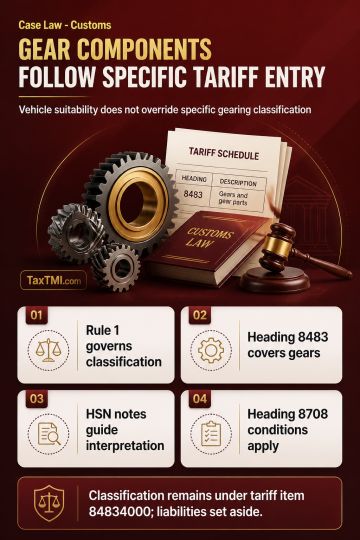
Tariff classification of vehicle gear components follows the specific gearing entry, displacing motor-vehicle parts classification and related liabili...
Service tax liability prior to the Point of Taxation regime arose on actual receipt of consideration, not merely on accrual-based book figures or sundry debtors; GTA liability also rested on the service recipient under reverse charge, and the related demands were unsustainable. Classification turned on the real nature of the activity, so export cargo handling could not be taxed as Clearing and Forwarding Agent service, and pure reimbursements without profit element were excluded from value. Advances linked to GTA service were covered by reverse charge, unsecured loan receipts were not consideration for service, and detention charges were penal in nature. CENVAT credit could not be denied for clerical invoice defects where receipt and use of input services were established. A second notice on the same known facts could not invoke the extended period, and Section 78 penalty failed for want of wilful suppression.
Service tax liability prior to the Point of Taxation regime arose on actual receipt of consideration, not merely on accrual-based book figures or sundry debtors; GTA liability also rested on the service recipient under reverse charge, and the related demands were unsustainable. Classification turned on the real nature of the activity, so export cargo handling could not be taxed as Clearing and Forwarding Agent service, and pure reimbursements without profit element were excluded from value. Advances linked to GTA service were covered by reverse charge, unsecured loan receipts were not consideration for service, and detention charges were penal in nature. CENVAT credit could not be denied for clerical invoice defects where receipt and use of input services were established. A second notice on the same known facts could not invoke the extended period, and Section 78 penalty failed for want of wilful suppression.
Note: It is a system-generated summary and is for quick reference only.
 TaxTMI
  TaxTMI
 of 4809














 Join Channel