Transfer pricing requires evidence for AMP transactions, functionally reliable comparables, and appropriate aggregation or Berry Ratio benchmarking me...
Revisionary jurisdiction cannot reopen share capital assessments where adequate inquiry supports a permissible view and no independent error is establ...
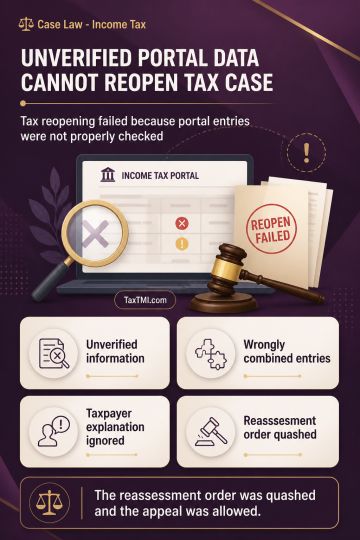
Reassessment jurisdiction fails where unverified portal information is aggregated without examining the taxpayer's explanation or relevance of entries...
Statutory sanction for delayed reassessment requires approval from the prescribed authority; approval by an inferior authority invalidates jurisdictio...
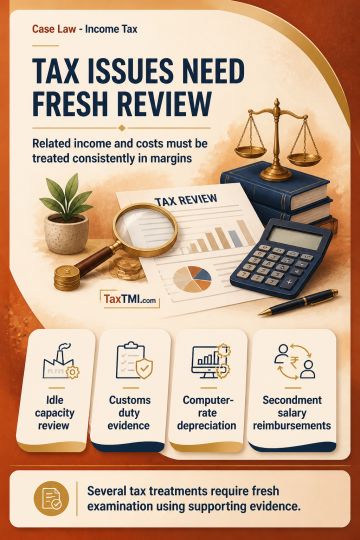
Transfer pricing margin adjustments require matching treatment of non-operating income and related costs, with comparability issues reconsidered on ev...
Preliminary-expense amortisation and MAT exempt-income adjustments prevailed, while trademark costs and managerial remuneration require fresh verifica...
Export valuation requires contemporaneous evidence; unrelated invoices cannot prove overvaluation, and dual penalties on firm and partner are impermis...
Service tax liability prior to the Point of Taxation regime arose on actual receipt of consideration, not merely on accrual-based book figures or sundry debtors; GTA liability also rested on the service recipient under reverse charge, and the related demands were unsustainable. Classification turned on the real nature of the activity, so export cargo handling could not be taxed as Clearing and Forwarding Agent service, and pure reimbursements without profit element were excluded from value. Advances linked to GTA service were covered by reverse charge, unsecured loan receipts were not consideration for service, and detention charges were penal in nature. CENVAT credit could not be denied for clerical invoice defects where receipt and use of input services were established. A second notice on the same known facts could not invoke the extended period, and Section 78 penalty failed for want of wilful suppression.
Service tax liability prior to the Point of Taxation regime arose on actual receipt of consideration, not merely on accrual-based book figures or sundry debtors; GTA liability also rested on the service recipient under reverse charge, and the related demands were unsustainable. Classification turned on the real nature of the activity, so export cargo handling could not be taxed as Clearing and Forwarding Agent service, and pure reimbursements without profit element were excluded from value. Advances linked to GTA service were covered by reverse charge, unsecured loan receipts were not consideration for service, and detention charges were penal in nature. CENVAT credit could not be denied for clerical invoice defects where receipt and use of input services were established. A second notice on the same known facts could not invoke the extended period, and Section 78 penalty failed for want of wilful suppression.
Note: It is a system-generated summary and is for quick reference only.
 TaxTMI
  TaxTMI
 of 4814


















 Join Channel