Charitable registration renewal cannot become an assessment of receipts, profitability or annual exemption compliance, requiring renewal and donation ...
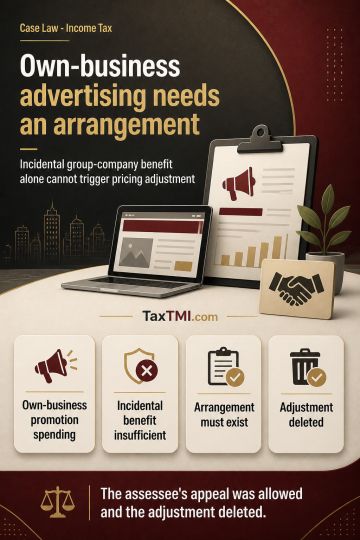
AMP expenditure for own business is not an international transaction without an associated-enterprise arrangement, eliminating transfer pricing adjust...
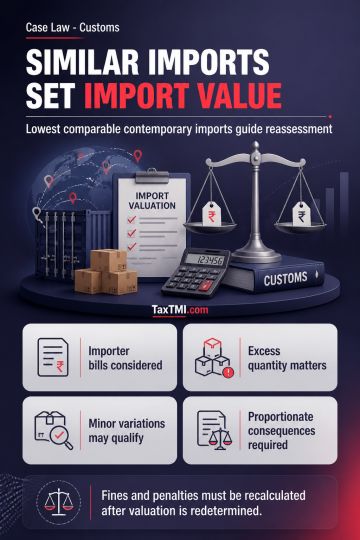
Customs valuation must use comparable contemporary imports, while confiscation fines and penalties require proportionate recalculation on reassessed v...
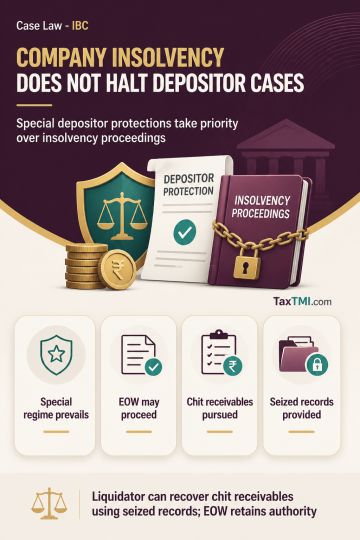
Depositor-protection proceedings prevail over corporate insolvency, while liquidators may recover chit receivables using copies of seized company reco...
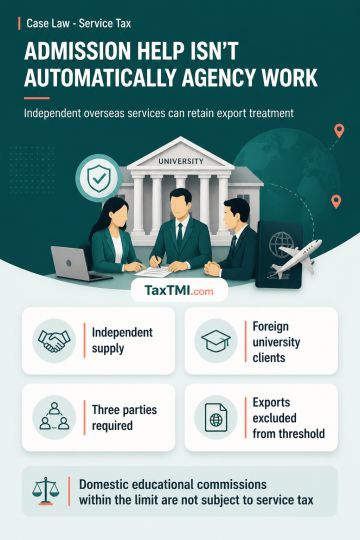
Intermediary service classification fails where overseas admission facilitation is supplied independently, preserving export treatment and small-provi...
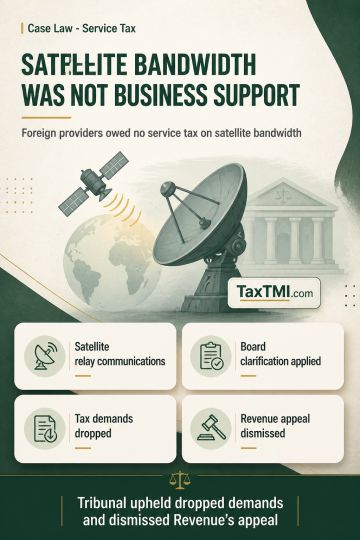
Satellite transponder bandwidth is telecommunication, not Business Support Service; foreign non-telegraph providers triggered no service tax liability...
The Central Government appoints 26 May 2026 as the date on which specified provisions of the Insolvency and Bankruptcy Code (Amendment) Act, 2026 come into force. The notification brings into operation sections 2 to 6, 8 to 33, 35 to 39, 41, 43 to 46, 48 to 59, 61 to 66, 68, clause (a) of sections 69 and 70, most sub-clauses of section 70(b), and section 72, subject to the express exception of sub-clause (xx) of section 70(b).
Note: It is a system-generated summary and is for quick reference only.