Arrest safeguards and transit remand requirements invalidated detention following inter-State transfer without communicated grounds or magistrate auth...
Arrest safeguards require disclosed grounds, relative intimation and transit remand, while duplicate prosecution under the CGST framework is unsustain...
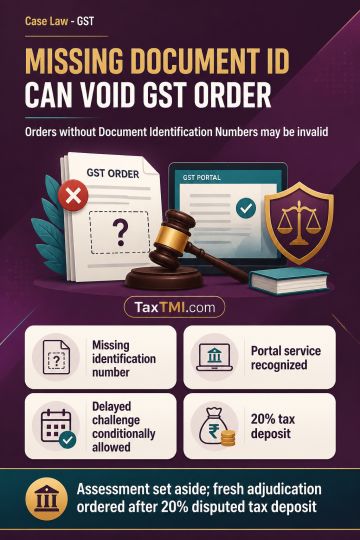
Document Identification Number defects can invalidate GST assessments, with delayed challenges entertained conditionally where patent irregularities e...
Windmill commissioning evidence supported higher depreciation where grid connection and electricity generation proved operational use before the relev...
Arrest under the CGST Act was held unlawful where the arrest memo did not properly disclose the grounds of arrest, the grounds were not shown as an annexure, the place of arrest was omitted, and electronic DIN-backed communication was not established. The Court found the later system-generated form prima facie suspicious and treated these defects as non-compliance with mandatory arrest procedure. On that basis, the detention and remand were declared illegal and unconstitutional, the remand order was quashed, and liberty was given to proceed afresh in accordance with law.
Arrest under the CGST Act was held unlawful where the arrest memo did not properly disclose the grounds of arrest, the grounds were not shown as an annexure, the place of arrest was omitted, and electronic DIN-backed communication was not established. The Court found the later system-generated form prima facie suspicious and treated these defects as non-compliance with mandatory arrest procedure. On that basis, the detention and remand were declared illegal and unconstitutional, the remand order was quashed, and liberty was given to proceed afresh in accordance with law.
Note: It is a system-generated summary and is for quick reference only.
 TaxTMI
  TaxTMI
 of 4807














 Join Channel


