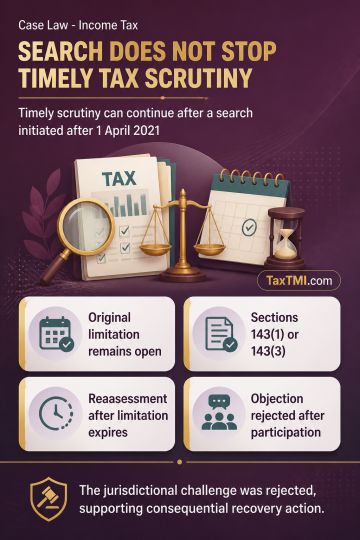
Post-search scrutiny assessment remains available where original assessment limitation is unexpired, permitting timely completion under regular assess...
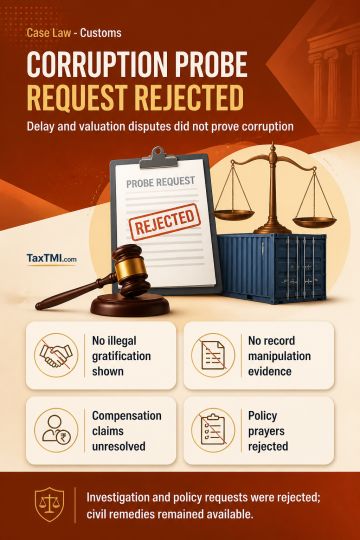
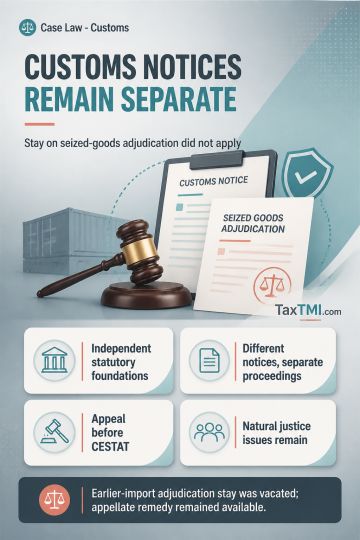
Independent show-cause notices remain separate proceedings, while customs adjudication challenges should ordinarily follow the statutory appellate rem...
Institutional incapacity in customs settlement proceedings excludes non-functional quorum periods from statutory disposal timelines, preventing automa...
Arrest under the CGST Act was held unlawful where the arrest memo did not properly disclose the grounds of arrest, the grounds were not shown as an annexure, the place of arrest was omitted, and electronic DIN-backed communication was not established. The Court found the later system-generated form prima facie suspicious and treated these defects as non-compliance with mandatory arrest procedure. On that basis, the detention and remand were declared illegal and unconstitutional, the remand order was quashed, and liberty was given to proceed afresh in accordance with law.
Arrest under the CGST Act was held unlawful where the arrest memo did not properly disclose the grounds of arrest, the grounds were not shown as an annexure, the place of arrest was omitted, and electronic DIN-backed communication was not established. The Court found the later system-generated form prima facie suspicious and treated these defects as non-compliance with mandatory arrest procedure. On that basis, the detention and remand were declared illegal and unconstitutional, the remand order was quashed, and liberty was given to proceed afresh in accordance with law.
Note: It is a system-generated summary and is for quick reference only.
 TaxTMI
  TaxTMI
 of 4811


















 Join Channel