Cooperative society deposits, member-interest TDS exemption and credit-facility deduction claims require verification through records and supporting e...
Customs jurisdiction over EPCG condition breaches survives export-obligation discharge certificates, requiring alleged fraud and misdeclaration to be ...
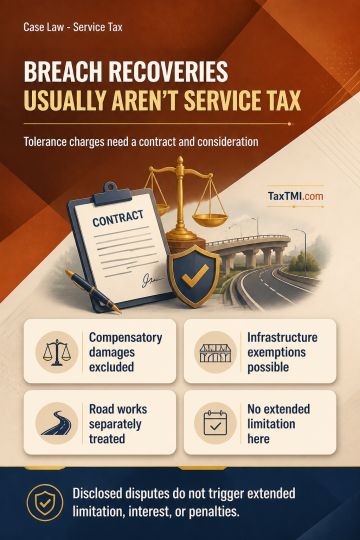
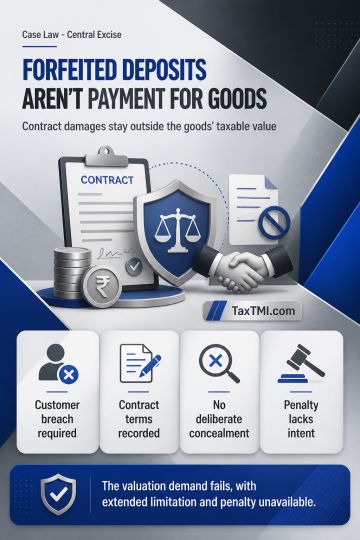
Contractual tolerance requires consideration; breach recoveries, qualifying public infrastructure services and road works escape service tax liability...
n-Hexane was classified as a separate chemically defined compound under Chapter 29 rather than as petroleum oil or motor spirit under Chapter 27. The Court held that the Revenue bore the burden of proving Chapter 27 classification and failed to show that the product satisfied all motor spirit conditions, including suitability for use as fuel in spark ignition engines. Applying Rule 3(a) of the General Rules of Interpretation, it preferred the more specific HSN description for hexane as an acyclic saturated hydrocarbon. It further found that manufacturing impurities did not convert the product into a mixture, and relied on the DGFT circular supporting Chapter 29 treatment. The Revenue's classification claim was rejected.
n-Hexane was classified as a separate chemically defined compound under Chapter 29 rather than as petroleum oil or motor spirit under Chapter 27. The Court held that the Revenue bore the burden of proving Chapter 27 classification and failed to show that the product satisfied all motor spirit conditions, including suitability for use as fuel in spark ignition engines. Applying Rule 3(a) of the General Rules of Interpretation, it preferred the more specific HSN description for hexane as an acyclic saturated hydrocarbon. It further found that manufacturing impurities did not convert the product into a mixture, and relied on the DGFT circular supporting Chapter 29 treatment. The Revenue's classification claim was rejected.
Note: It is a system-generated summary and is for quick reference only.
 TaxTMI
 of 4807










 Join Channel


 TaxTMI