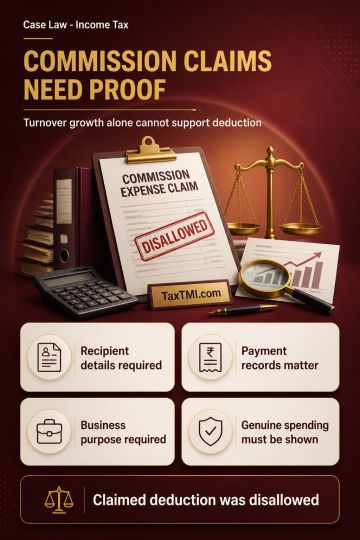
Business expenditure deduction requires proof of genuine commission payments and commercial allowability; turnover growth alone cannot validate the cl...
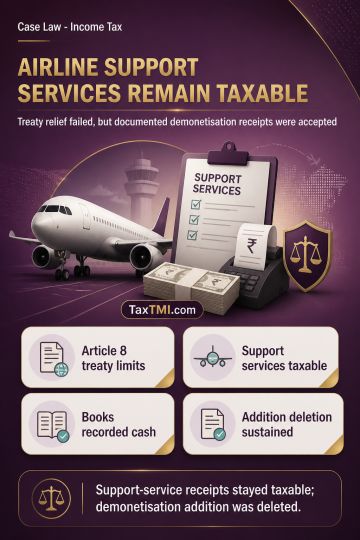
Article 8 treaty coverage excluded third-party airline support services, while documented demonetisation cash receipts remained accepted business inco...
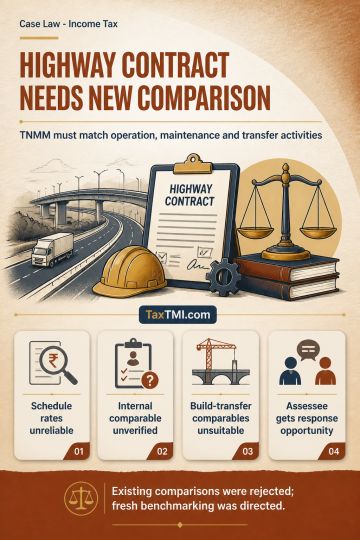
Functional comparability under TNMM requires highway contract benchmarks to reflect operation, maintenance and transfer activities, requiring fresh be...
n-Hexane was classified as a separate chemically defined compound under Chapter 29 rather than as petroleum oil or motor spirit under Chapter 27. The Court held that the Revenue bore the burden of proving Chapter 27 classification and failed to show that the product satisfied all motor spirit conditions, including suitability for use as fuel in spark ignition engines. Applying Rule 3(a) of the General Rules of Interpretation, it preferred the more specific HSN description for hexane as an acyclic saturated hydrocarbon. It further found that manufacturing impurities did not convert the product into a mixture, and relied on the DGFT circular supporting Chapter 29 treatment. The Revenue's classification claim was rejected.
n-Hexane was classified as a separate chemically defined compound under Chapter 29 rather than as petroleum oil or motor spirit under Chapter 27. The Court held that the Revenue bore the burden of proving Chapter 27 classification and failed to show that the product satisfied all motor spirit conditions, including suitability for use as fuel in spark ignition engines. Applying Rule 3(a) of the General Rules of Interpretation, it preferred the more specific HSN description for hexane as an acyclic saturated hydrocarbon. It further found that manufacturing impurities did not convert the product into a mixture, and relied on the DGFT circular supporting Chapter 29 treatment. The Revenue's classification claim was rejected.
Note: It is a system-generated summary and is for quick reference only.
 TaxTMI
  TaxTMI
 of 4809






 Join Channel


