Commercial vehicle depreciation, scientifically determined warranty provisions and exempt-income disallowances were resolved in favour of the taxpayer...
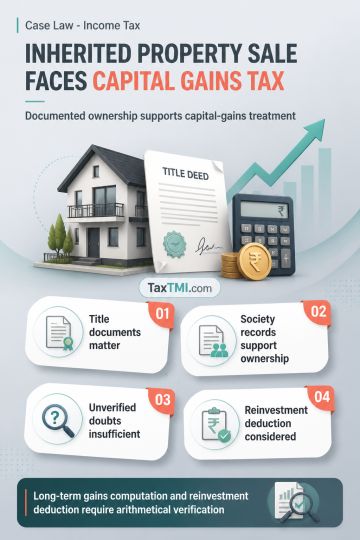
Inherited property sale proceeds require capital-gains treatment where ownership is supported by evidence, not suspicion or unverified signature doubt...
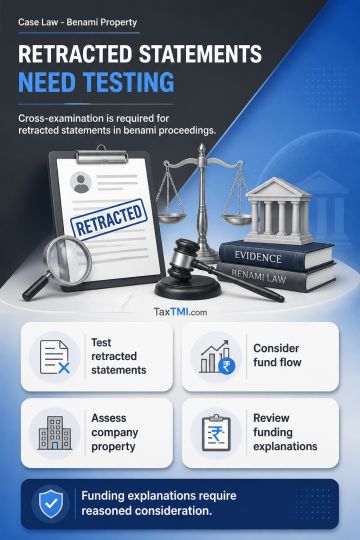
Cross-examination of retracted statements is essential where foundational evidence supports a benami allegation and documented funding explanations re...
Capital-goods exemption covers plant-modernisation accessories, while the import restriction applies only to earlier capital-goods components and spar...
Constitutional judicial review permits challenges to ECIRs and connected money-laundering proceedings where coercive action affects fundamental intere...
n-Hexane was classified as a separate chemically defined compound under Chapter 29 rather than as petroleum oil or motor spirit under Chapter 27. The Court held that the Revenue bore the burden of proving Chapter 27 classification and failed to show that the product satisfied all motor spirit conditions, including suitability for use as fuel in spark ignition engines. Applying Rule 3(a) of the General Rules of Interpretation, it preferred the more specific HSN description for hexane as an acyclic saturated hydrocarbon. It further found that manufacturing impurities did not convert the product into a mixture, and relied on the DGFT circular supporting Chapter 29 treatment. The Revenue's classification claim was rejected.
n-Hexane was classified as a separate chemically defined compound under Chapter 29 rather than as petroleum oil or motor spirit under Chapter 27. The Court held that the Revenue bore the burden of proving Chapter 27 classification and failed to show that the product satisfied all motor spirit conditions, including suitability for use as fuel in spark ignition engines. Applying Rule 3(a) of the General Rules of Interpretation, it preferred the more specific HSN description for hexane as an acyclic saturated hydrocarbon. It further found that manufacturing impurities did not convert the product into a mixture, and relied on the DGFT circular supporting Chapter 29 treatment. The Revenue's classification claim was rejected.
Note: It is a system-generated summary and is for quick reference only.
 TaxTMI
  TaxTMI
 of 4809
















 Join Channel


