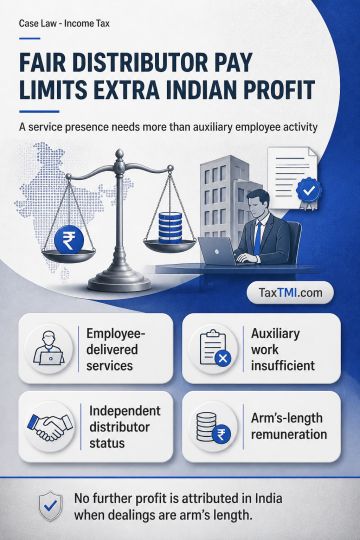
Service permanent establishment requires non-auxiliary services, while arm's-length distributor remuneration precludes further profit attribution in I...
Make-available condition excludes standard SaaS subscription receipts where customers receive no independently usable technical knowledge after subscr...
Anonymous donation classification fails where charitable trusts maintain undisputed donor identity records and evidence corpus contributions' intended...
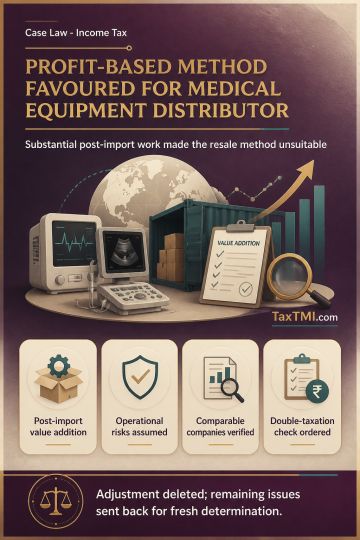
Transfer pricing method selection favours TNMM where medical-equipment distribution involves substantial post-import value addition and operational ri...
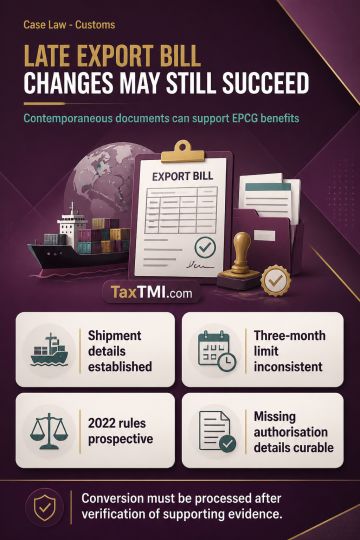
Post-export shipping bill conversion remains available where contemporaneous evidence supports EPCG benefits despite curable procedural omissions and ...
n-Hexane was classified as a separate chemically defined compound under Chapter 29 rather than as petroleum oil or motor spirit under Chapter 27. The Court held that the Revenue bore the burden of proving Chapter 27 classification and failed to show that the product satisfied all motor spirit conditions, including suitability for use as fuel in spark ignition engines. Applying Rule 3(a) of the General Rules of Interpretation, it preferred the more specific HSN description for hexane as an acyclic saturated hydrocarbon. It further found that manufacturing impurities did not convert the product into a mixture, and relied on the DGFT circular supporting Chapter 29 treatment. The Revenue's classification claim was rejected.
n-Hexane was classified as a separate chemically defined compound under Chapter 29 rather than as petroleum oil or motor spirit under Chapter 27. The Court held that the Revenue bore the burden of proving Chapter 27 classification and failed to show that the product satisfied all motor spirit conditions, including suitability for use as fuel in spark ignition engines. Applying Rule 3(a) of the General Rules of Interpretation, it preferred the more specific HSN description for hexane as an acyclic saturated hydrocarbon. It further found that manufacturing impurities did not convert the product into a mixture, and relied on the DGFT circular supporting Chapter 29 treatment. The Revenue's classification claim was rejected.
Note: It is a system-generated summary and is for quick reference only.
 TaxTMI
  TaxTMI
 of 4811













 Join Channel