Donor-directed corpus contributions retain capital character despite exemption claims under section 10(23C)(vi), preventing their treatment as taxable...
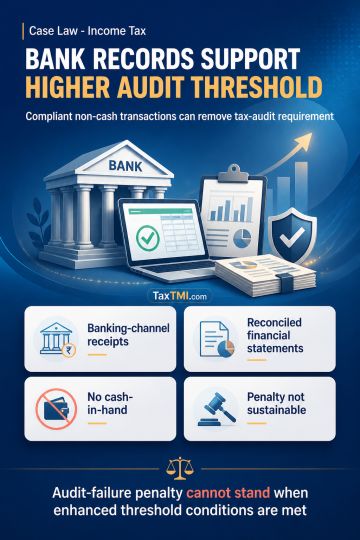
Enhanced tax-audit threshold applies where banking records establish compliant non-cash receipts and payments, eliminating penalty exposure for audit ...
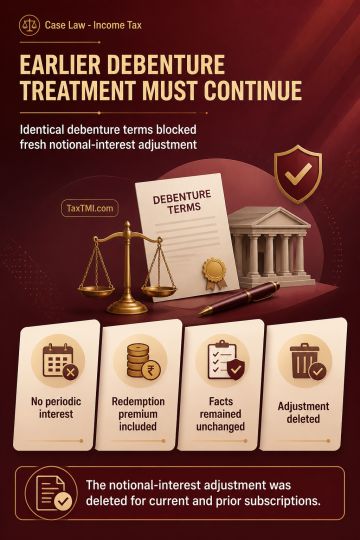
Transfer pricing consistency protects identical non-interest-bearing debenture terms from a later notional-interest adjustment without valid statutory...
Rectification of debatable deduction claims cannot reverse scrutiny-approved co-operative society interest income deductions as apparent record errors...
Cash-method accounting bars presumptive interest taxation, while unsupported securities and share-trading additions require reliable material and veri...
n-Hexane was classified as a separate chemically defined compound under Chapter 29 rather than as petroleum oil or motor spirit under Chapter 27. The Court held that the Revenue bore the burden of proving Chapter 27 classification and failed to show that the product satisfied all motor spirit conditions, including suitability for use as fuel in spark ignition engines. Applying Rule 3(a) of the General Rules of Interpretation, it preferred the more specific HSN description for hexane as an acyclic saturated hydrocarbon. It further found that manufacturing impurities did not convert the product into a mixture, and relied on the DGFT circular supporting Chapter 29 treatment. The Revenue's classification claim was rejected.
n-Hexane was classified as a separate chemically defined compound under Chapter 29 rather than as petroleum oil or motor spirit under Chapter 27. The Court held that the Revenue bore the burden of proving Chapter 27 classification and failed to show that the product satisfied all motor spirit conditions, including suitability for use as fuel in spark ignition engines. Applying Rule 3(a) of the General Rules of Interpretation, it preferred the more specific HSN description for hexane as an acyclic saturated hydrocarbon. It further found that manufacturing impurities did not convert the product into a mixture, and relied on the DGFT circular supporting Chapter 29 treatment. The Revenue's classification claim was rejected.
Note: It is a system-generated summary and is for quick reference only.
 TaxTMI
  TaxTMI
 of 4811
















 Join Channel