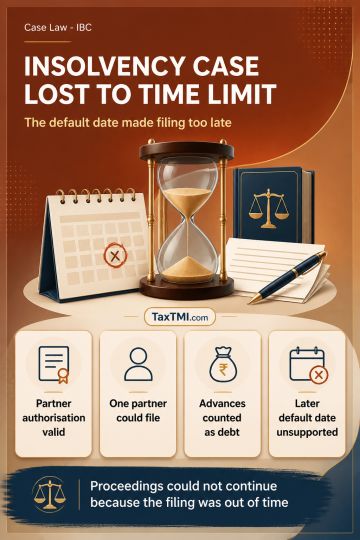
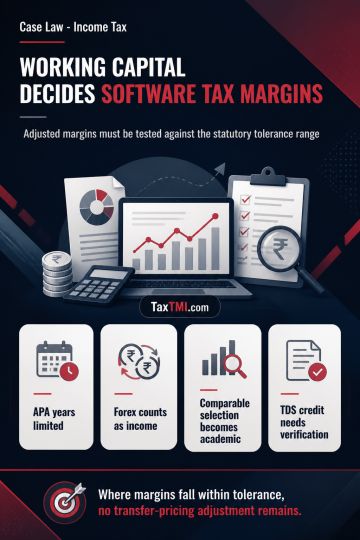
Working-capital adjustment determines whether software-services transfer-pricing margins fall within the statutory tolerance range, eliminating any ad...
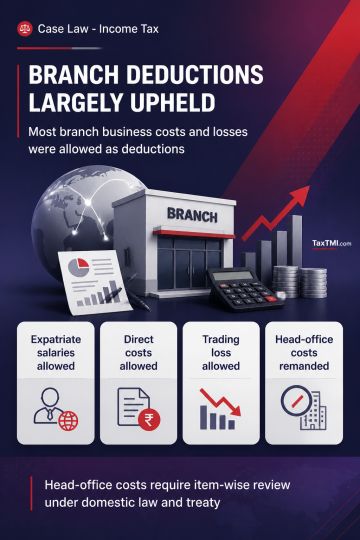
Permanent establishment deductions upheld for expatriate salaries, direct costs and trading losses, while head-office costs require fresh classificati...
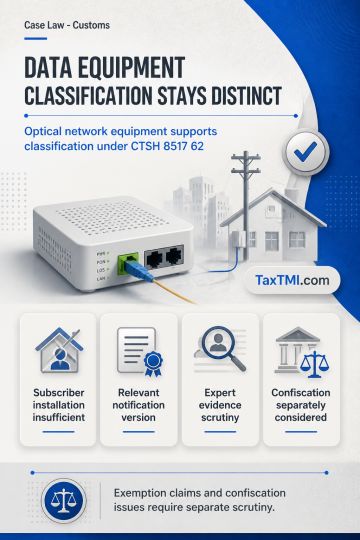
Data transmission equipment classification under CTSH 8517 62 remains distinct from residual classification, with exemption evidence requiring scrutin...
A High Court held that an investigation-stage communication issued after the petitioner's representative indicated willingness to pay differential duty was not a statutory demand fastening customs liability, so the communication was quashed and the department was required to commence regular adjudication by issuing a show cause notice. The Court also held that payment made during investigation, whether under protest or otherwise, does not bar adjudication and may be appropriated only against the final liability determined in that process. Refund of the amount deposited during investigation was declined, and no further demand or recovery was permitted until adjudication was completed.
A High Court held that an investigation-stage communication issued after the petitioner's representative indicated willingness to pay differential duty was not a statutory demand fastening customs liability, so the communication was quashed and the department was required to commence regular adjudication by issuing a show cause notice. The Court also held that payment made during investigation, whether under protest or otherwise, does not bar adjudication and may be appropriated only against the final liability determined in that process. Refund of the amount deposited during investigation was declined, and no further demand or recovery was permitted until adjudication was completed.
Note: It is a system-generated summary and is for quick reference only.
 TaxTMI
  TaxTMI
 of 4807



 Join Channel