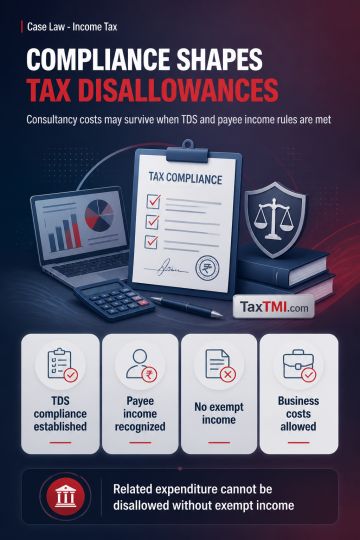
Tax deduction compliance and payee income recognition govern consultancy disallowance, while no exempt income prevents related expenditure disallowanc...
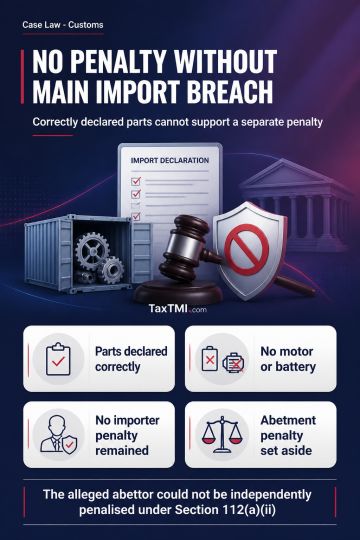
Derivative abetment liability fails when correctly declared imported components establish no underlying improper importation by the principal importer...
Page of 4805
Press 'Enter' after typing page number.
701 to 720 of 96100 Results
❮
❯
❯❯
0 / 200
Expand Note
Add to Folder
No Folders have been created
+
Are you sure you want to delete "My most important" ?
A steamer agent's penalty under Section 112(a) of the Customs Act was set aside because it filed the IGM on the Master's declarations, promptly sought amendment on confirmation of the retained onboard cargo, and there was no evidence of conscious involvement, connivance, aiding, abetting, or deliberate suppression. The Tribunal held that a mere procedural lapse, inadvertent omission, or communication failure is insufficient for penal liability. It also ruled that retained onboard cargo which remained continuously on the vessel, was never unloaded in India, and was discharged abroad did not acquire the character of imported goods and therefore was not liable to confiscation under Section 111.
A steamer agent's penalty under Section 112(a) of the Customs Act was set aside because it filed the IGM on the Master's declarations, promptly sought amendment on confirmation of the retained onboard cargo, and there was no evidence of conscious involvement, connivance, aiding, abetting, or deliberate suppression. The Tribunal held that a mere procedural lapse, inadvertent omission, or communication failure is insufficient for penal liability. It also ruled that retained onboard cargo which remained continuously on the vessel, was never unloaded in India, and was discharged abroad did not acquire the character of imported goods and therefore was not liable to confiscation under Section 111.
Note: It is a system-generated summary and is for quick reference only.
 TaxTMI
 of 4805











 Join Channel


 TaxTMI