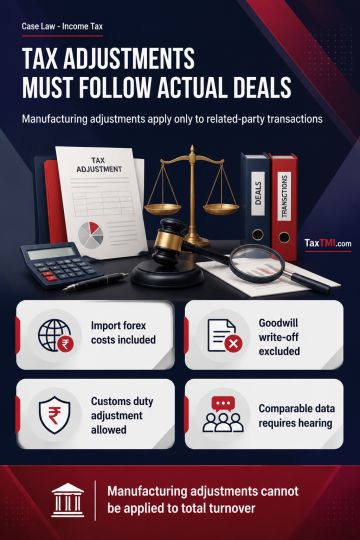
International transaction benchmarking restricts transfer pricing adjustments to associated-enterprise dealings, while functional comparability govern...
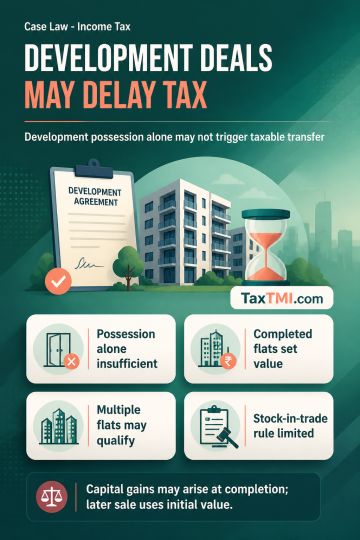
Joint development agreements defer taxable transfer where possession lacks part performance, while completed flats determine consideration and exempti...
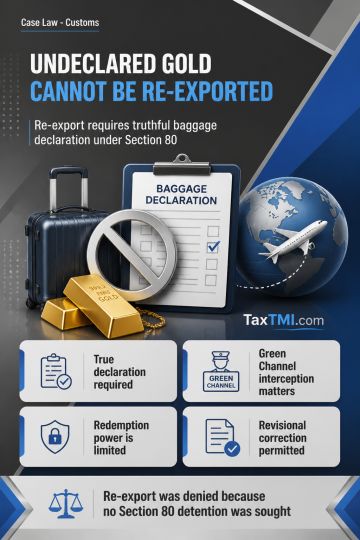
Passenger baggage re-export requires true declaration and cannot be granted indirectly through discretionary redemption of undeclared prohibited goods...
A steamer agent's penalty under Section 112(a) of the Customs Act was set aside because it filed the IGM on the Master's declarations, promptly sought amendment on confirmation of the retained onboard cargo, and there was no evidence of conscious involvement, connivance, aiding, abetting, or deliberate suppression. The Tribunal held that a mere procedural lapse, inadvertent omission, or communication failure is insufficient for penal liability. It also ruled that retained onboard cargo which remained continuously on the vessel, was never unloaded in India, and was discharged abroad did not acquire the character of imported goods and therefore was not liable to confiscation under Section 111.
A steamer agent's penalty under Section 112(a) of the Customs Act was set aside because it filed the IGM on the Master's declarations, promptly sought amendment on confirmation of the retained onboard cargo, and there was no evidence of conscious involvement, connivance, aiding, abetting, or deliberate suppression. The Tribunal held that a mere procedural lapse, inadvertent omission, or communication failure is insufficient for penal liability. It also ruled that retained onboard cargo which remained continuously on the vessel, was never unloaded in India, and was discharged abroad did not acquire the character of imported goods and therefore was not liable to confiscation under Section 111.
Note: It is a system-generated summary and is for quick reference only.
 TaxTMI
 of 4807













 Join Channel


 TaxTMI
