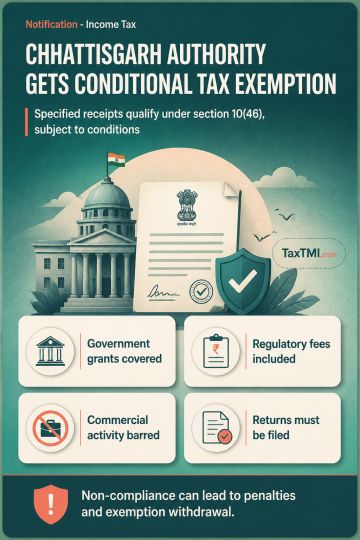
Specified regulatory authority income receives conditional tax exemption, subject to non-commercial activity, unchanged income character, and return f...
Tax exemption for regulatory authority income applies retrospectively, subject to non-commercial activity, unchanged income sources, and return-filing...
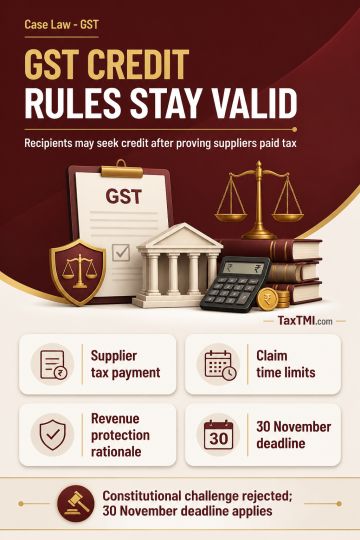
Input tax credit conditions remain constitutionally valid, with eligible recipient claims considered under GST circulars and retrospective filing dead...
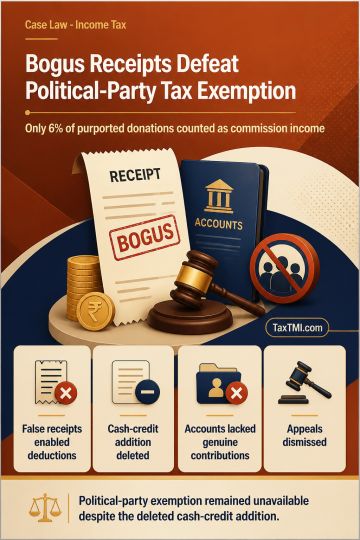
Bogus donation receipts justified commission income assessment and defeated political-party tax exemption for inaccurate accounts and reporting failur...
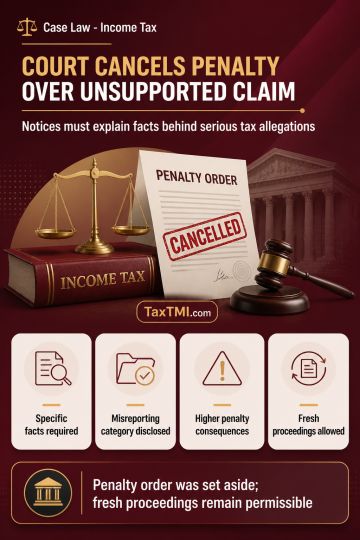
Pure reimbursement without income element escapes tax withholding, while delayed withholding and unsupported provisions face deferred or renewed scrut...
Public benefit requirement defeats charitable registration where residents' association services are reciprocal, member-only facilities governed by mu...
Interference with an approved resolution plan under the Insolvency and Bankruptcy Code is confined to patent illegality, material irregularity, violation of mandatory law, or perversity, and a completed insolvency process cannot be reopened for mere dissatisfaction with claim treatment. The appellant's claim remained disputed and contingent throughout verification because of reciprocal contractual claims and counter-claims, so there was no admitted operational debt and no basis for invoking notice rights under Section 24(3)(c). Allegations of fraud, suppression, and procedural impropriety were unsupported, and the appellant showed no material prejudice affecting the resolution outcome. The appeal was dismissed, and the approved and implemented plan was left undisturbed.
Interference with an approved resolution plan under the Insolvency and Bankruptcy Code is confined to patent illegality, material irregularity, violation of mandatory law, or perversity, and a completed insolvency process cannot be reopened for mere dissatisfaction with claim treatment. The appellant's claim remained disputed and contingent throughout verification because of reciprocal contractual claims and counter-claims, so there was no admitted operational debt and no basis for invoking notice rights under Section 24(3)(c). Allegations of fraud, suppression, and procedural impropriety were unsupported, and the appellant showed no material prejudice affecting the resolution outcome. The appeal was dismissed, and the approved and implemented plan was left undisturbed.
Note: It is a system-generated summary and is for quick reference only.
 TaxTMI
  TaxTMI
 of 4807









 Join Channel