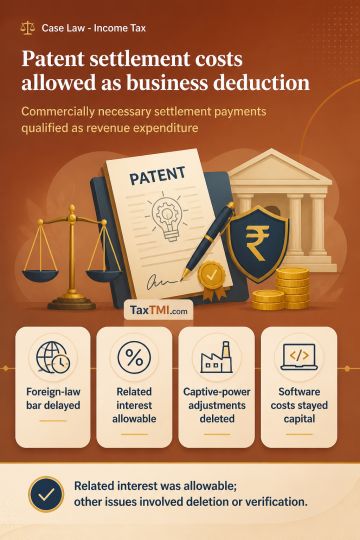
Patent-settlement expenditure treated as commercially expedient revenue outlay, with foreign-law restrictions inapplicable before the prospective amen...
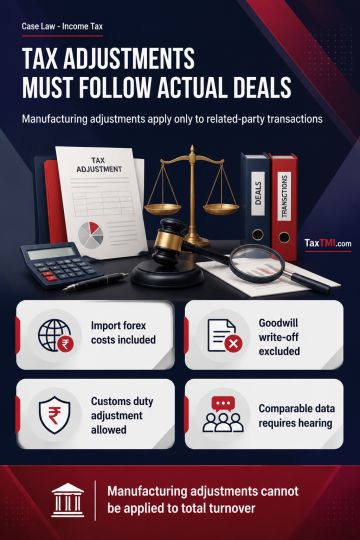
International transaction benchmarking restricts transfer pricing adjustments to associated-enterprise dealings, while functional comparability govern...
Interference with an approved resolution plan under the Insolvency and Bankruptcy Code is confined to patent illegality, material irregularity, violation of mandatory law, or perversity, and a completed insolvency process cannot be reopened for mere dissatisfaction with claim treatment. The appellant's claim remained disputed and contingent throughout verification because of reciprocal contractual claims and counter-claims, so there was no admitted operational debt and no basis for invoking notice rights under Section 24(3)(c). Allegations of fraud, suppression, and procedural impropriety were unsupported, and the appellant showed no material prejudice affecting the resolution outcome. The appeal was dismissed, and the approved and implemented plan was left undisturbed.
Interference with an approved resolution plan under the Insolvency and Bankruptcy Code is confined to patent illegality, material irregularity, violation of mandatory law, or perversity, and a completed insolvency process cannot be reopened for mere dissatisfaction with claim treatment. The appellant's claim remained disputed and contingent throughout verification because of reciprocal contractual claims and counter-claims, so there was no admitted operational debt and no basis for invoking notice rights under Section 24(3)(c). Allegations of fraud, suppression, and procedural impropriety were unsupported, and the appellant showed no material prejudice affecting the resolution outcome. The appeal was dismissed, and the approved and implemented plan was left undisturbed.
Note: It is a system-generated summary and is for quick reference only.
 TaxTMI
  TaxTMI
 of 4809










 Join Channel