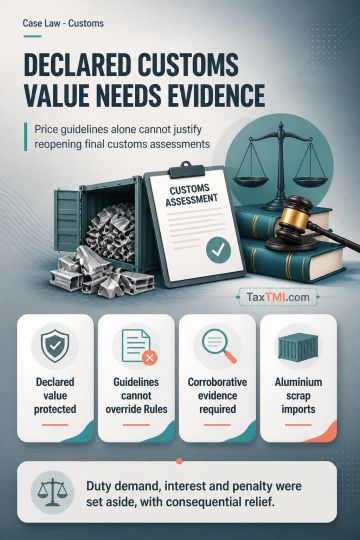
Transaction value cannot be rejected solely on non-statutory valuation guidelines without corroborative evidence supporting reassessment of final cust...
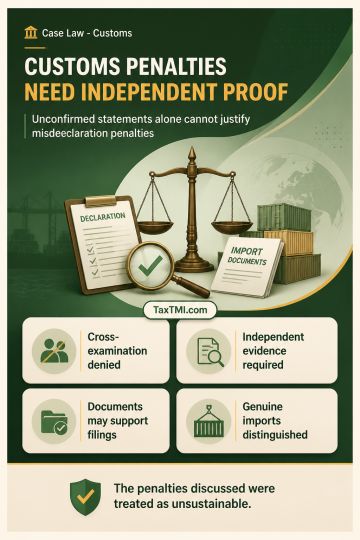
Cross-examination rights and corroborated evidence limit customs penalties for misdeclaration in genuine import transactions involving documented clea...
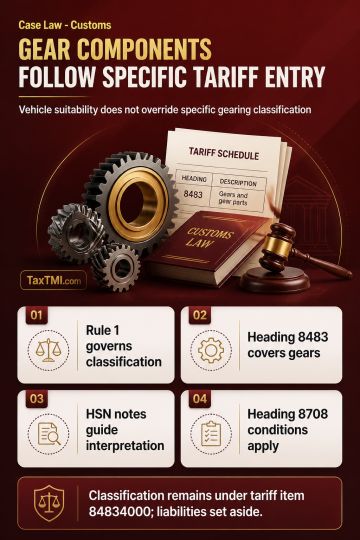
Tariff classification of vehicle gear components follows the specific gearing entry, displacing motor-vehicle parts classification and related liabili...
Necessary-party requirements limit impleadment of independent entities, while deferred consideration does not create an appealable adverse determinati...
Food supplement classification requires common parlance and authoritative tests, preventing treatment as proprietary Ayurvedic medicines without suppo...
Concessional electricity charges under Clause 16(a) of the 2019 Industrial Policy were held to apply only to new industrial enterprises, while existing enterprises undertaking substantial expansion fell under Clause 16(b) and could claim only the rebate linked to incremental consumption. The 29.04.2022 amendment substituting "eligible" with "new" in Clause 16(a) and aligning Clause 16(b) with substantial expansion was treated as clarificatory and retrospective, except for the newly introduced three-year duration under Clause 16(b), which operated prospectively. The respondent therefore had no entitlement to Clause 16(a) concession, and promissory estoppel could not create a benefit beyond the Policy's true scope.
Concessional electricity charges under Clause 16(a) of the 2019 Industrial Policy were held to apply only to new industrial enterprises, while existing enterprises undertaking substantial expansion fell under Clause 16(b) and could claim only the rebate linked to incremental consumption. The 29.04.2022 amendment substituting "eligible" with "new" in Clause 16(a) and aligning Clause 16(b) with substantial expansion was treated as clarificatory and retrospective, except for the newly introduced three-year duration under Clause 16(b), which operated prospectively. The respondent therefore had no entitlement to Clause 16(a) concession, and promissory estoppel could not create a benefit beyond the Policy's true scope.
Note: It is a system-generated summary and is for quick reference only.
 TaxTMI
  TaxTMI
 of 4807











 Join Channel


