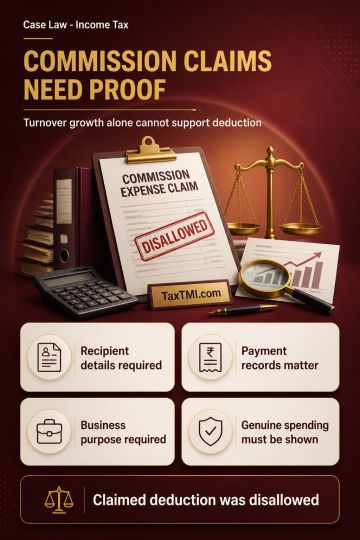
Business expenditure deduction requires proof of genuine commission payments and commercial allowability; turnover growth alone cannot validate the cl...
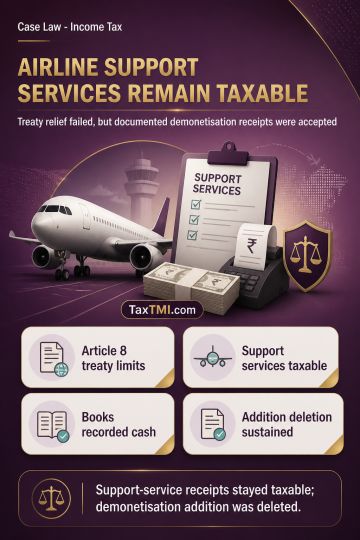
Article 8 treaty coverage excluded third-party airline support services, while documented demonetisation cash receipts remained accepted business inco...
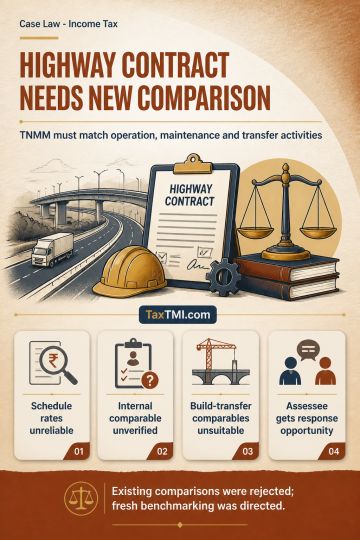
Functional comparability under TNMM requires highway contract benchmarks to reflect operation, maintenance and transfer activities, requiring fresh be...
Concessional electricity charges under Clause 16(a) of the 2019 Industrial Policy were held to apply only to new industrial enterprises, while existing enterprises undertaking substantial expansion fell under Clause 16(b) and could claim only the rebate linked to incremental consumption. The 29.04.2022 amendment substituting "eligible" with "new" in Clause 16(a) and aligning Clause 16(b) with substantial expansion was treated as clarificatory and retrospective, except for the newly introduced three-year duration under Clause 16(b), which operated prospectively. The respondent therefore had no entitlement to Clause 16(a) concession, and promissory estoppel could not create a benefit beyond the Policy's true scope.
Concessional electricity charges under Clause 16(a) of the 2019 Industrial Policy were held to apply only to new industrial enterprises, while existing enterprises undertaking substantial expansion fell under Clause 16(b) and could claim only the rebate linked to incremental consumption. The 29.04.2022 amendment substituting "eligible" with "new" in Clause 16(a) and aligning Clause 16(b) with substantial expansion was treated as clarificatory and retrospective, except for the newly introduced three-year duration under Clause 16(b), which operated prospectively. The respondent therefore had no entitlement to Clause 16(a) concession, and promissory estoppel could not create a benefit beyond the Policy's true scope.
Note: It is a system-generated summary and is for quick reference only.
 TaxTMI
  TaxTMI
 of 4809




 Join Channel


