Educational approval requires mandatory State registration, but incidental surplus and trustee-owned land do not prove private benefit or profit motiv...
Judicial review of settlement orders cannot reopen settled customs notices, while statutory interest remains subject to verification and quantificatio...
Customs Broker licence lending for consideration justified revocation where exporter authorisation and client verification obligations were also breac...
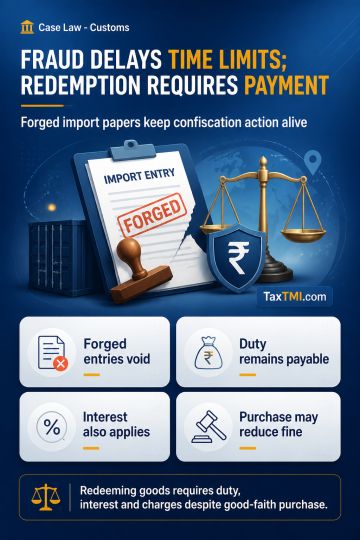
Fraudulent import documents suspend limitation protection, while redemption of confiscated goods requires duty and interest despite bona fide purchase...
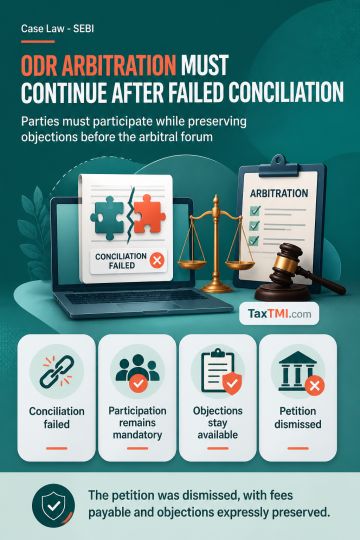
ODR arbitration participation remains mandatory after failed conciliation, while jurisdictional and maintainability objections stay available before t...
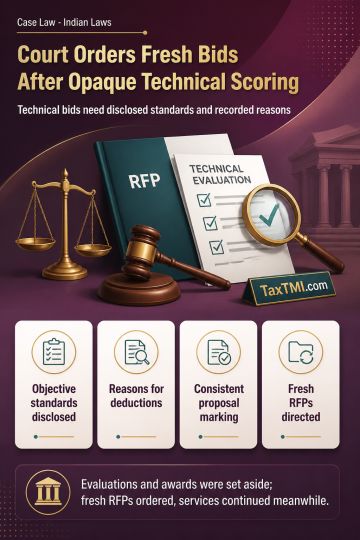
Transparency in technical bid evaluation requires disclosed standards and recorded reasons; opaque scoring invalidated tender awards and required fres...
Parallel adjudicatory proceedings on the same GST subject matter are barred once one authority has first initiated action. Relying on the Supreme Court's clarification in Armour Security, the High Court stated that the relevant test is whether the liability, deficiency or obligation arises from the same contravention and overlaps in substance. It directed the petitioner to file responses before the Central and State authorities, and required those authorities to coordinate and decide which of them would proceed further. The result is that only one competent authority may continue with adjudication for the same period and subject matter, avoiding duplication by parallel proceedings.
Parallel adjudicatory proceedings on the same GST subject matter are barred once one authority has first initiated action. Relying on the Supreme Court's clarification in Armour Security, the High Court stated that the relevant test is whether the liability, deficiency or obligation arises from the same contravention and overlaps in substance. It directed the petitioner to file responses before the Central and State authorities, and required those authorities to coordinate and decide which of them would proceed further. The result is that only one competent authority may continue with adjudication for the same period and subject matter, avoiding duplication by parallel proceedings.
Note: It is a system-generated summary and is for quick reference only.
 TaxTMI
  TaxTMI
 of 4813














 Join Channel