Retention of seized property survives where recorded reasons support proceeds of crime, while stayed investigation periods are excluded from limitatio...
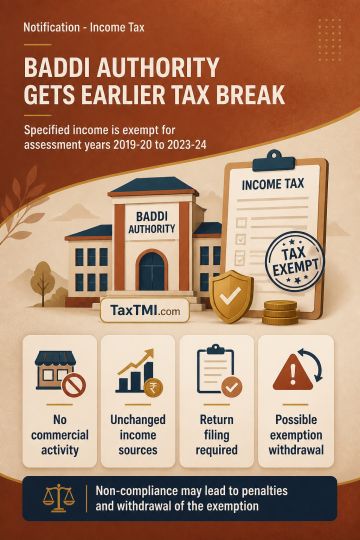
Specified income of Baddi Barotiwala Nalagarh Development Authority receives conditional tax exemption, retrospectively covering its designated assess...
Specified development authority income receives retrospective tax exemption, subject to non-commercial activity, unchanged income sources, and return-...
Unified Brand India framework introduces voluntary Trust Mark certification and funding support for export branding, packaging and global promotional ...
Origin Declaration authentication governs preferential tariff claims under India-UK CETA, requiring a validated reference number before import clearan...
Separate assessment orders for different years remain valid when distinct notices and hearing opportunities prevent prejudice from combined proceeding...
Parallel adjudicatory proceedings on the same GST subject matter are barred once one authority has first initiated action. Relying on the Supreme Court's clarification in Armour Security, the High Court stated that the relevant test is whether the liability, deficiency or obligation arises from the same contravention and overlaps in substance. It directed the petitioner to file responses before the Central and State authorities, and required those authorities to coordinate and decide which of them would proceed further. The result is that only one competent authority may continue with adjudication for the same period and subject matter, avoiding duplication by parallel proceedings.
Parallel adjudicatory proceedings on the same GST subject matter are barred once one authority has first initiated action. Relying on the Supreme Court's clarification in Armour Security, the High Court stated that the relevant test is whether the liability, deficiency or obligation arises from the same contravention and overlaps in substance. It directed the petitioner to file responses before the Central and State authorities, and required those authorities to coordinate and decide which of them would proceed further. The result is that only one competent authority may continue with adjudication for the same period and subject matter, avoiding duplication by parallel proceedings.
Note: It is a system-generated summary and is for quick reference only.
 TaxTMI
 of 4805



















 Join Channel


 TaxTMI
