Transaction value rejection requires reliable corroboration; refundable VAT is excluded and temporary registration does not defeat new-vehicle exempti...
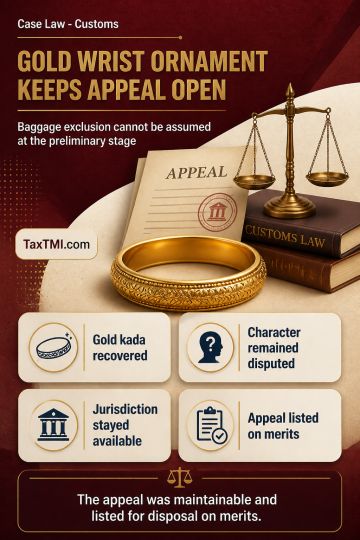
Appellate jurisdiction remains available where a wrist-worn gold ornament cannot conclusively be characterised as imported baggage at the preliminary ...
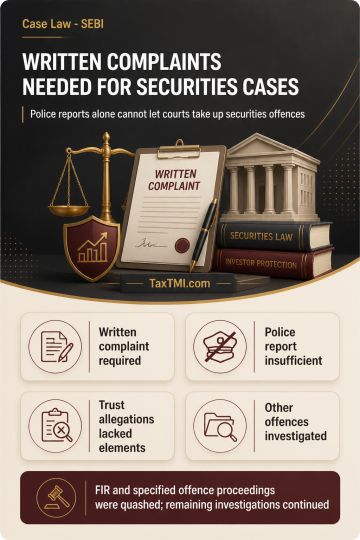
Written complaint requirement bars cognizance on police reports for securities offences, while unsupported breach of trust and cheating allegations fa...
Risk-based postal import clearance standardises electronic assessment, document requests, duty realisation and delivery controls at Foreign Post Offic...
Customs Cargo Service Provider appointment extends custodianship to additional terminal land, subject to cargo-control, security and licence condition...
Page of 4809
Press 'Enter' after typing page number.
521 to 540 of 96174 Results
❮
❯
❯❯
0 / 200
Expand Note
Add to Folder
No Folders have been created
+
Are you sure you want to delete "My most important" ?
A High Court considered preliminary objections to departmental appeals against an advance ruling and upheld their maintainability. It held that the 90-day period for passing the appellate order under Section 101(2) is directory, operating as an outer time limit and not a jurisdictional bar that nullifies the appeal on expiry. It also accepted the actual dates of communication for limitation purposes, found condonation competent where filed within the extended period, held that separate CGST and SGST officers had statutory appellate locus, and treated manual filing as a procedural issue not defeating the appeal. The Court further rejected estoppel and natural justice objections.
A High Court considered preliminary objections to departmental appeals against an advance ruling and upheld their maintainability. It held that the 90-day period for passing the appellate order under Section 101(2) is directory, operating as an outer time limit and not a jurisdictional bar that nullifies the appeal on expiry. It also accepted the actual dates of communication for limitation purposes, found condonation competent where filed within the extended period, held that separate CGST and SGST officers had statutory appellate locus, and treated manual filing as a procedural issue not defeating the appeal. The Court further rejected estoppel and natural justice objections.
Note: It is a system-generated summary and is for quick reference only.
 TaxTMI
  TaxTMI
 of 4809








 Join Channel