Defined public benefit can retain charitable character; registration renewal requires examining genuine activities and legal compliance, not surplus a...
Capital reduction is distinct from share buy-back, preventing buy-back tax; restructuring interest and related business deductions also survive scruti...
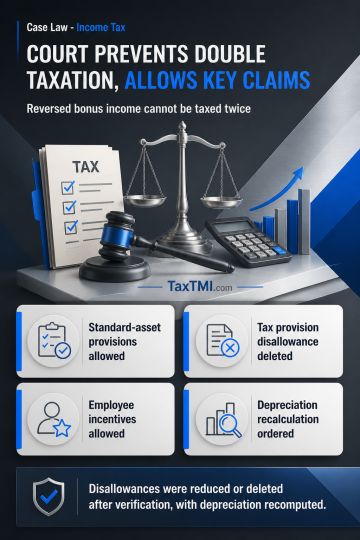
Transfer pricing and tax deductions upheld on established principles, while employee contributions and warranty provisions returned for fresh examinat...
Captive transfer pricing relies on industrial consumer tariffs, while genuine quotations can benchmark effluent treatment transfers under the Other Me...
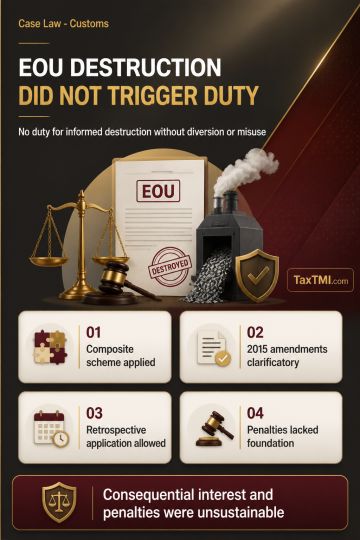
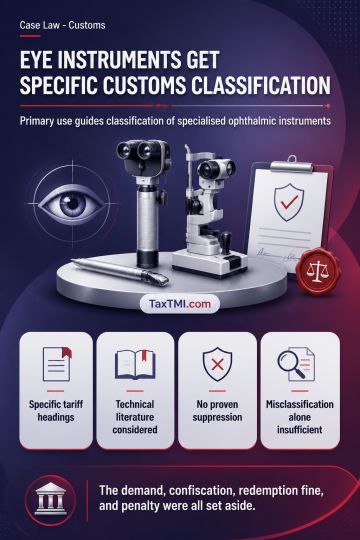
Specific tariff classification for ophthalmic instruments and extended limitation principles determine the treatment of duty demands, confiscation, an...
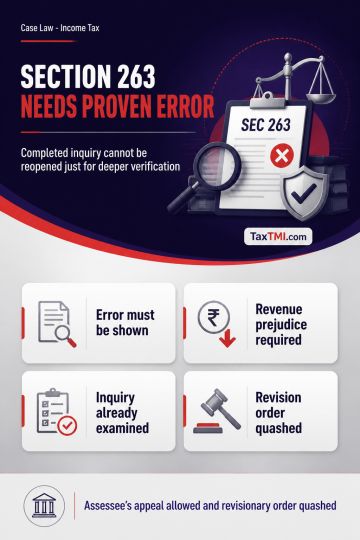
Revision under section 263 was upheld because the reassessment order suffered from a complete lack of inquiry on the purchase-side taxability of the difference between immovable property consideration and stamp duty value. The Tribunal noted that the Assessing Officer examined the sale-side valuation issue but failed to consider the applicable provision for the purchase transaction, instead referring to section 56(2)(x), which was not relevant to the assessment year. This non-application of mind on a material issue made the order erroneous and prejudicial to the interests of the Revenue. As the Principal Commissioner only set aside the matter for fresh verification after granting the assessee an opportunity, the revisionary jurisdiction was valid.
Revision under section 263 was upheld because the reassessment order suffered from a complete lack of inquiry on the purchase-side taxability of the difference between immovable property consideration and stamp duty value. The Tribunal noted that the Assessing Officer examined the sale-side valuation issue but failed to consider the applicable provision for the purchase transaction, instead referring to section 56(2)(x), which was not relevant to the assessment year. This non-application of mind on a material issue made the order erroneous and prejudicial to the interests of the Revenue. As the Principal Commissioner only set aside the matter for fresh verification after granting the assessee an opportunity, the revisionary jurisdiction was valid.
Note: It is a system-generated summary and is for quick reference only.
 TaxTMI
 of 4805















 Join Channel


 TaxTMI